
Book summary
The Starfish and the Spider by Ori Brafman and Rod A. Beckstrom explores the fundamental differences between centralized organizations, symbolized by the spider that dies when its head is cut off, and decentralized ones, represented by the starfish that regenerates and multiplies when damaged. The book argues that starfish-like systems, driven by peer-to-peer networks, shared ideology, and loose or nonexistent leadership, are far more resilient, innovative, and adaptable in the face of disruption than rigid hierarchical structures. Drawing on examples ranging from Apache tribes and Alcoholics Anonymous to Napster and Wikipedia, it shows how the internet age has empowered decentralized models to challenge traditional industries and institutions. The core argument is that embracing decentralization, catalyzing rather than controlling, and fostering collaboration without top-down authority are essential strategies for thriving in an increasingly connected world.
Key founder lessons
-
1
Decentralize to become unstoppable
Founders should build organizations without a central leader or HQ so that attacks or failures in one part don't kill the whole, as with the Apache versus the Spanish.
-
2
Catalyst over commander
Instead of issuing orders, founders must act as catalysts who inspire and connect people then step back, allowing the network to self-organize like the peer-to-peer file sharing movements.
-
3
Embrace chaos and fluidity
Startup leaders should foster flat, rule-light structures that encourage rapid idea flow and adaptation rather than rigid hierarchies, mirroring starfish that regenerate limbs.
-
4
Ideology fuels viral spread
Founders must identify and amplify a shared, powerful ideology that motivates members intrinsically, turning users into evangelists as seen in Alcoholics Anonymous or Wikipedia.
-
5
Hybridize for resilience
Combine spider-like central control for core functions with starfish-like decentralization for innovation to gain the best of both, such as eBay using centralized payments with decentralized listings.
Grok's review
Insightful decentralization metaphor, but stretched thin.
The core idea is brilliant: decentralized 'starfish' organizations (think Apache, Wikipedia, or early Napster) can be far more resilient and innovative than centralized 'spider' ones, and the book does a great job showing how leadership, ideology, and catalysts work in leaderless systems. For startup founders it sparks useful thinking about when to fight centralization in your own company or industry. However, it suffers from the weaknesses you flagged: the central analogy gets padded with repetitive examples, many of the case studies already felt dated by the late 2000s, and the evidence is mostly anecdotal storytelling rather than rigorous research. It's still worth reading, but treat it as a provocative 45-minute idea stretched into a book.
Best for: Founders wrestling with scaling culture or industry disruption
Similar books
-

The Tipping Point
Malcolm Gladwell
Explores how ideas and movements spread virally, offering lessons on building scalable, decentralized influence.
-

Thinking in systems
Donella H. Meadows, Diana Wright
Teaches systemic thinking to design resilient, adaptive organizations that thrive without central control.
-
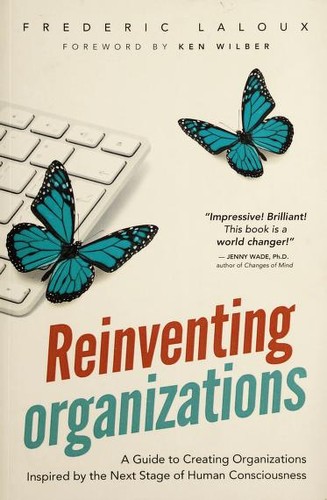
Reinventing Organizations
Frederic Laloux
Reveals how self-managing, decentralized companies outperform traditional hierarchies.
-

The Lean Startup
Eric Ries
Provides a scientific method for building companies through rapid experimentation and iteration.
-

Give and Take
Adam Grant, Adam M. Grant
Shows how generosity and network effects drive long-term success in decentralized professional ecosystems.
-

Antifragile
Nassim Nicholas Taleb, Genís Sánchez Barberán
Explains how to build systems that gain from disorder, volatility, and decentralization.
Founder activity
Nobody has shelved this yet
Be the first founder to add it.