Book summary
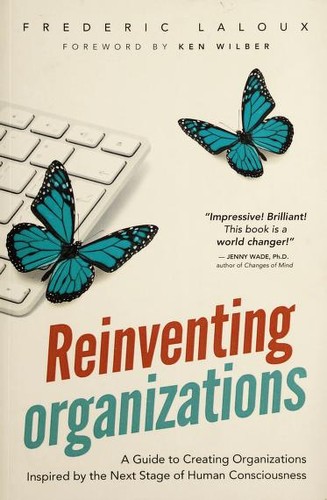
Reinventing Organizations by Frederic Laloux explores the evolution of human organizations through successive paradigms from tribal to modern and argues we are now transitioning to a new "Teal" stage. Teal organizations operate with three core principles—self-management, wholeness, and evolutionary purpose—replacing traditional hierarchy, top-down control, and profit-driven goals with distributed authority, bringing one's full self to work, and letting purpose guide strategy organically. Through extensive case studies of pioneering companies, schools, and nonprofits, Laloux demonstrates how these soulful practices lead to greater innovation, employee engagement, and adaptability. The book presents an optimistic vision that humanity is ready for more powerful, purposeful organizational models that align with our evolving consciousness.
Key founder lessons
-
1
Evolutionary Purpose
Listen to what the organization wants to become and let strategy emerge organically rather than imposing top-down plans.
-
2
Self-Management
Replace hierarchy with peer-based authority where anyone can make decisions using the advice process.
-
3
Wholeness
Bring your full self to work by creating psychologically safe spaces for vulnerability and authenticity.
-
4
Teal Practices
Adopt concrete processes like Holacracy-inspired roles, conflict resolution, and sensing into purpose over traditional management tools.
-
5
Paradigm Shift
Move beyond Orange (achieve) and Green (pluralistic) mindsets to Teal (evolutionary) consciousness for breakthrough organizational energy.
Grok's review
Visionary but padded and thinly evidenced.
Laloux's book is a sweeping, optimistic tour of 'evolutionary' organizations that operate with self-management, wholeness, and purpose instead of traditional hierarchy. The core ideas—replacing command-and-control with trust, distributed authority, and inner-driven culture—have genuinely inspired many founders burned out on toxic scaling, and the real-world case studies (Buurtzorg, Morning Star, Patagonia) are the strongest part. But it's bloated at 360 pages with repetitive storytelling, New-Age spiritual padding that can feel woo-woo to pragmatic builders, and surprisingly thin empirical evidence beyond cherry-picked anecdotes; the 'color stages' evolutionary model feels more like a consulting framework than rigorous research. Dated in places too—some examples haven't aged perfectly in a post-2014 world of remote work and AI. Still worth reading if you can skim, because it forces you to question whether your startup's management defaults are actually optimal or just inherited baggage.
Best for: Founders questioning hierarchy at scale
Similar books
-

Team of Teams
Stanley A. McChrystal, Tantum Collins
Reveals how to build agile, adaptive organizations in complex environments.
-

The Fifth Discipline
Peter Senge, Peter M. Senge
Masterful guide to building learning organizations with systems thinking.
-

Drive
Daniel H. Pink
Explores intrinsic motivation and autonomy essential for self-managing teams.
-

Leaders Eat Last
Simon Sinek
Shows how trust and safety create the culture for innovative organizations.
-

Holacracy
Brian J. Robertson
Practical blueprint for distributed authority and self-organization.
-

The starfish and the spider
Ori Brafman, Rod A. Beckstrom
Illustrates decentralized leadership principles for resilient companies.
Founder activity
Nobody has shelved this yet
Be the first founder to add it.