
Book summary
Holacracy by Brian J. Robertson presents a complete alternative to traditional top-down management in which authority is distributed across the organization through a system of self-organizing circles and explicit roles rather than hierarchy or consensus. The book details the Holacracy constitution and governance processes that allow teams to dynamically evolve roles and responsibilities in response to tensions, replacing ego-driven politics and micromanagement with clear rules for decision-making and accountability. At its core, Robertson argues that this framework unlocks agility, purpose-driven work, and collective intelligence by treating the organization as a living system that can sense and adapt faster than conventional structures.
Key founder lessons
-
1
Replace hierarchy with roles
Founders define dynamic roles instead of job titles, allowing fluid authority that evolves with the organization's needs as described in the constitution.
-
2
Use governance meetings
Separate tactical and governance meetings to evolve the organizational structure through integrative decision-making, avoiding top-down control.
-
3
Adopt the constitution
Implement the Holacracy constitution as the core rulebook that distributes authority and eliminates traditional management power.
-
4
Process tensions into actions
Capture every tension as a signal for improvement and process it via defined rules to drive continuous organizational evolution.
-
5
Enable self-organization
Empower everyone to act as a leader within their roles, removing the need for managerial approval and fostering rapid adaptation.
Grok's review
Intriguing system, bloated pitch with thin proof.
Holacracy lays out a fascinating alternative to traditional hierarchy through distributed authority, roles, and governance meetings that can genuinely unlock speed and clarity in fast-moving startups. Robertson's core ideas around separating people from roles and using tension-driven governance are clever and still relevant for teams tired of politics. However, the book is padded with repetitive jargon, feels like an extended sales brochure for his consulting practice, and leans heavily on a single company's implementation (his own) with surprisingly little rigorous evidence or long-term case studies. It's dated in the post-Zappos hype era where many adopters quietly walked back the full system. Worth skimming for the framework if you're wrestling with scaling decision-making, but don't treat it as gospel.
Best for: Founders experimenting with radical self-management.
Similar books
-
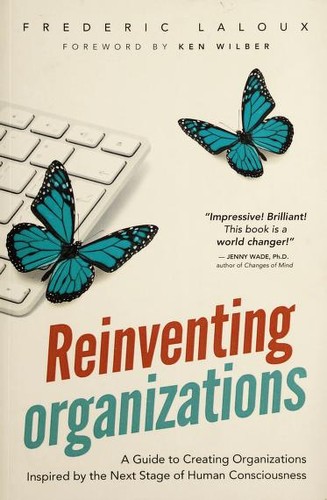
Reinventing Organizations
Frederic Laloux
Explores evolutionary organizations with self-management, offering practical insights beyond Holacracy for building adaptive companies.
-

Team of Teams
Stanley A. McChrystal, Tantum Collins
Shows how to scale agility and decentralized decision-making in complex environments, vital for modern founders.
-
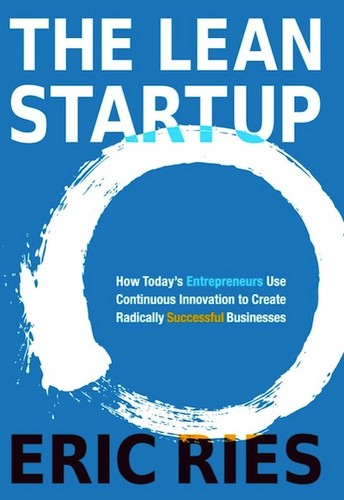
The Lean Startup
Eric Ries
Teaches iterative experimentation and adaptive management to build resilient, innovative companies efficiently.
-

High Output Management
Andrew S. Grove
Delivers timeless principles on productivity, decision-making, and leading high-performing teams.
-

Drive
Daniel H. Pink
Reveals the science of motivation, helping founders design autonomy-focused cultures that boost engagement.
-

The Fifth Discipline
Peter Senge, Peter M. Senge
Introduces systems thinking and learning organizations essential for long-term company building and adaptation.
Founder activity
Nobody has shelved this yet
Be the first founder to add it.