
Book summary
Team of Teams recounts how General Stanley McChrystal transformed JSOC from a rigid hierarchical organization into a flexible network while fighting Al Qaeda in Iraq. He realized that the enemy’s decentralized speed outpaced the military’s traditional emphasis on efficiency and top-down control so JSOC adopted shared consciousness through constant transparent communication paired with empowered execution at the small-team level. The core argument is that in a complex interdependent world organizations must shift from mechanical predictability to organic adaptability by combining the autonomy of small empowered groups with relentless cross-team learning and information sharing. McChrystal illustrates the model with examples from business hospitals NASA and other fields showing how any institution can become a “team of teams” to thrive amid turbulence.
Key founder lessons
-
1
Embrace a Team of Teams Structure
Replace rigid hierarchies with a network of empowered small teams that share information rapidly to match the speed of decentralized adversaries like Al Qaeda.
-
2
Prioritize Shared Consciousness
Build trust and transparency through relentless, redundant communication so every team understands the overall mission and can act without constant top-down direction.
-
3
Shift from Efficiency to Adaptability
Abandon industrial-era command-and-control for organic resilience, enabling quick pivots in volatile environments where plans quickly become obsolete.
-
4
Decentralize Decision-Making Authority
Push tactical decisions to the edge of the network where information is freshest, while maintaining centralized alignment on strategy and values.
-
5
Foster Trust Through Transparency
Create systems like daily O&I video calls that force cross-team visibility, turning silos into a cohesive organism that learns faster than any competitor.
Grok's review
Military metaphor stretched thin for startups.
Team of Teams delivers a compelling core idea—replace rigid hierarchies with decentralized networks that maintain shared consciousness through constant transparent communication—which feels freshly relevant to fast-moving startups. McChrystal's war stories from JSOC are gripping and illustrate the shift from efficiency to adaptability, backed by some cross-domain examples like ERs and NASA. But the book is heavily padded with repetitive anecdotes, dated management theory from the 1990s-2000s, and evidence that's more illustrative than rigorous; it often reads like a long TED talk expanded into 300 pages of military memoir. For founders it's worth skimming for the central framework, yet the translation from counterterrorism to SaaS or hardware teams feels forced and lacks the tactical depth of books like High Output Management or The Hard Thing About Hard Things.
Best for: CEOs scaling beyond 50 people who love military analogies.
Similar books
-

High Output Management
Andrew S. Grove
Teaches scalable leadership and management systems for high-performing teams.
-
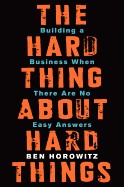
The Hard Thing About Hard Things
Ben Horowitz
Offers raw insights on leading through chaos and building resilient organizations.
-

Turn the Ship Around!: A True Story of Turning Followers into Leaders
L. David Marquet, Stephen R. Covey
Shows how to empower teams for agility and decentralized decision-making.
-

Thinking in systems
Donella H. Meadows, Diana Wright
Builds systemic thinking skills crucial for complex organizational challenges.
-

Extreme ownership
Jocko Willink, Leif Babin
Instills leadership principles of accountability and disciplined execution.
-

The Score Takes Care of Itself
Walsh, Bill
Reveals how to build a culture of excellence and peak team performance.
Founder activity
Nobody has shelved this yet
Be the first founder to add it.