
Book summary
The Evolution of Everything by Matt Ridley argues that the world and its major achievements arise primarily through bottom-up evolutionary processes rather than top-down design or control. Drawing on examples from science, economics, history, politics, and philosophy, Ridley shows how patterns in genes, morality, culture, technology, the economy, education, government, and even religion emerge spontaneously without central planners or architects, much like flocks of birds or termite cathedrals. He contends that our persistent fascination with imposed direction blinds us to the power of emergent trends, which have driven progress in health, agriculture, innovation, and global development. The core argument is a passionate defense of evolution as the universal mechanism shaping everything, demolishing the illusion that human command and control are the primary forces behind change.
Key founder lessons
-
1
Embrace bottom-up emergence
Founders should foster self-organizing teams and markets rather than micromanaging every decision, allowing innovation to evolve naturally as in Ridley's examples of technology and economies.
-
2
Resist top-down control
Avoid over-planning product roadmaps or company culture; instead, let customer feedback and employee initiatives drive direction, mirroring how the internet and mobile revolutions emerged unplanned.
-
3
Trust evolutionary trends
Identify and ride long-term bottom-up shifts in markets or tech, such as Asia's rise or yield improvements, rather than attempting to dictate outcomes through centralized strategy.
-
4
Decentralize decision-making
Distribute authority across the startup like evolving morality or brains without a designer, enabling faster adaptation and creativity without a single leader's constant intervention.
-
5
Question intelligent design myths
Challenge assumptions that success requires a visionary CEO or government-like oversight, recognizing that most progress, from genes to culture, arises unplanned from countless small interactions.
Grok's review
Sweeping but padded libertarian sermon.
Ridley is a superb, opinionated writer and the core thesis—that bottom-up evolution beats top-down design across domains from technology to morality—is both true and useful for founders who already intuit that markets, code, and culture outpace central planning. The book shines when it draws on economics, genomics, and tech history to hammer home emergent order, echoing Hayek and complexity science in accessible prose. But it's fatally weakened by repetition, thin or cherry-picked evidence, and dated feels (published 2015, it already reads stale on the internet and genomics). The same point is made in 15 slightly different ways, turning what could have been a sharp 200-page manifesto into a 400-page ramble. For startup minds it's a mixed bag: inspiring skepticism of bureaucracy, yet offering little practical next-step wisdom beyond 'let evolution happen.'
Best for: Founders already steeped in evolutionary economics who want ideological reinforcement.
Similar books
-
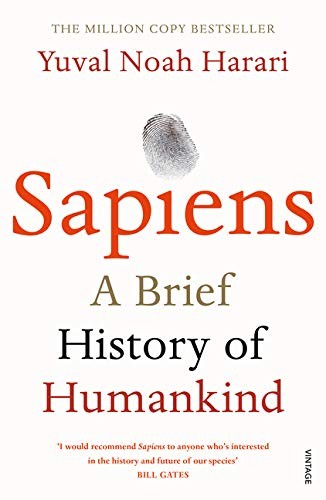
Sapiens
Yuval Noah Harari
Sweeping evolutionary narrative reveals cultural forces shaping society, offering founders insights on innovation and scaling organizations.
-

The Rational Optimist
Matt Ridley
Celebrates bottom-up progress through trade and ideas, teaching founders why decentralized innovation drives business success.
-

Antifragile
Nassim Nicholas Taleb, Genís Sánchez Barberán
Explains building systems that thrive on volatility, vital for startup resilience and decision-making under uncertainty.
-

Guns, Germs, and Steel
Jared Diamond
Examines environmental factors in societal evolution, providing lessons on competitive advantages and path dependence in markets.
-

The Beginning of Infinity
David Deutsch
Optimistic view of knowledge growth through criticism, inspiring founders to pursue bold, iterative innovation.
-

Scale
Geoffrey West
Reveals mathematical laws governing growth, helping founders understand company scaling limits and sustainable expansion.
Founder activity
Nobody has shelved this yet
Be the first founder to add it.