
Book summary
Scale by Geoffrey West explores the hidden mathematical laws that govern growth, aging, and sustainability across all living systems from organisms to cities and companies. The core argument is that diverse biological and social phenomena obey remarkably simple scaling laws rooted in the fractal geometry of resource networks such as circulatory systems and infrastructure which deliver energy and remove waste. These laws predict that larger mammals are more efficient, live longer, and metabolize at predictable rates, while cities and businesses exhibit parallel scaling in innovation, pace of life, and growth that ultimately collides with physical limits. West shows how this underlying simplicity unites the complexity of life and offers a unified quantitative framework for understanding mortality, economic productivity, and the sustainability of human civilization.
Key founder lessons
-
1
Sublinear scaling for efficiency
Founders should design company processes and networks to achieve 15-25% efficiency gains with each doubling of size, mirroring biological metabolic scaling.
-
2
Superlinear scaling for innovation
Growth metrics like patents and revenues accelerate superlinearly with city or firm size, so prioritize network effects that amplify output faster than headcount.
-
3
Pace of life accelerates with size
Larger organizations experience faster innovation cycles and shorter product half-lives, requiring founders to embrace relentless tempo to avoid stagnation.
-
4
Finite lifespan without resets
Without deliberate innovation or structural resets, companies follow predictable trajectories toward slowdown and demise, just as organisms do.
-
5
Optimal scaling via networks
Build fractal-like internal networks for resource distribution and waste removal to sustain growth, as biology shows this geometry underpins all efficient scaling.
Grok's review
Brilliant scaling laws buried in physicist padding.
Geoffrey West delivers a mind-expanding framework showing how quarter-power scaling laws govern everything from metabolism and lifespan in organisms to growth, innovation, and collapse in cities and companies. The core insight—that networks (circulatory, social, infrastructural) drive predictable efficiencies and limits—is pure gold for founders thinking about sustainable growth, why startups must keep innovating to avoid stagnation, and the inevitable tension between pace and scale. Unfortunately the book is padded with repetitive explanations, overly long historical tangents, and sometimes thin or cherry-picked evidence that feels dated in 2024; the business and city sections are the weakest and least rigorous compared to the biology. Still worth reading once for the conceptual models that will permanently change how you see organizational trajectories.
Best for: Founders wrestling with hypergrowth and long-term company lifecycles
Similar books
-

The vital question
Nick Lane
Explores energy and complexity in life, offering insights on scaling systems and innovation for growing companies.
-

Antifragile
Nassim Nicholas Taleb, Genís Sánchez Barberán
Shows how to thrive in volatility, teaching founders to build resilient, scalable businesses.
-
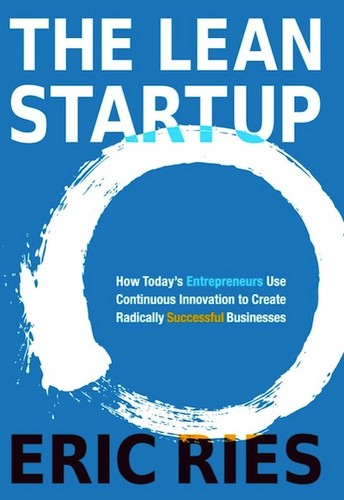
The Lean Startup
Eric Ries
Provides a scientific method for building and scaling startups through rapid experimentation and iteration.
-
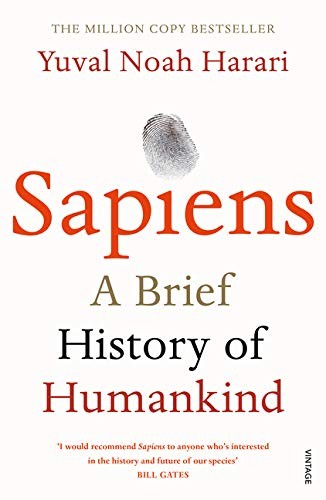
Sapiens
Yuval Noah Harari
Reveals how human societies scaled through myths and cooperation, with lessons for company culture and growth.
Founder activity
Nobody has shelved this yet
Be the first founder to add it.