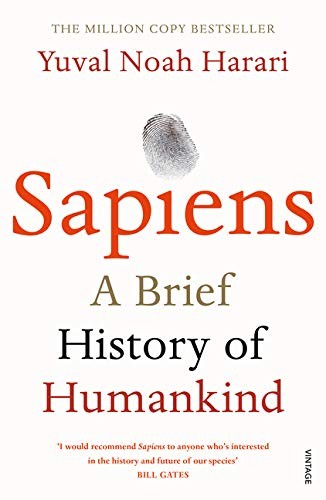
Book summary
Sapiens by Yuval Noah Harari is a sweeping history of Homo sapiens from the emergence of modern cognition around 70,000 years ago to the present day. It argues that the Cognitive Revolution enabled shared myths and fictions such as money, religion, nations, and corporations, which allowed flexible cooperation at massive scale and propelled sapiens to dominance over other human species and the planet. The book traces how the Agricultural Revolution, empires, science, capitalism, and the Scientific Revolution created ever-larger networks of power while often increasing human suffering and ecological destruction. Ultimately Harari contends that our species is now on the verge of acquiring god-like abilities to engineer life and ourselves, forcing us to decide what we want to become.
Key founder lessons
-
1
Cognitive Revolution enabled scalable myths
Founders build companies on shared fictions like brands and missions that unite strangers, just as sapiens used stories to cooperate at scale.
-
2
Agricultural Revolution was a trap
Scaling too fast for efficiency can create more work and unhappiness; validate product-market fit before over-investing in growth.
-
3
Money is the ultimate shared fiction
Create or align with believable narratives that facilitate trade and valuation, as money allowed empires and markets to expand.
-
4
Empires drive cultural unification
Aggressively expand market dominance to spread your startup's 'culture' and standards, mirroring how empires homogenized beliefs.
-
5
Science and capitalism fuel rapid change
Treat your venture as an experiment combining curiosity with profit motives to accelerate innovation beyond natural selection.
Grok's review
Big ideas, thin evidence, founder catnip with padding.
Sapiens is a sweeping, provocative tour of human history that brilliantly reframes money, religion, empires, and science as shared myths that let sapiens scale from scattered bands to globe-spanning civilizations. Harari’s gift is connecting dots across disciplines in ways that make you see startups, network effects, and cultural memes differently—useful for any founder wrestling with what stories their company is really selling. But the weaknesses are real: it’s padded with repetitive examples, leans on dated pop-science (some claims about cognition and agriculture have been walked back by newer research), and often substitutes clever narrative for rigorous evidence. Still, the scale of thinking it encourages is rare and valuable for leaders who want to zoom out from daily execution.
Best for: Founders who want macro perspective on culture and cooperation
Similar books
-

Guns, Germs, and Steel
Jared Diamond
Explains how geography and environment shaped civilizations, offering macro lessons on competitive advantages for startups.
-
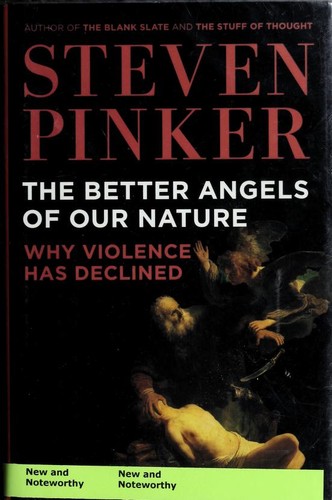
The better angels of our nature
Steven Pinker
Charts humanity's decline in violence, revealing progress patterns and psychological insights valuable for leadership and scaling teams.
-

Thinking, fast and slow
Daniel Kahneman
Reveals cognitive biases and decision systems, essential for better founder judgment, strategy, and avoiding startup pitfalls.
-

The Psychology of Money
Morgan Housel
Explores timeless behaviors around wealth and risk, delivering practical wisdom for financial decisions and company building.
-
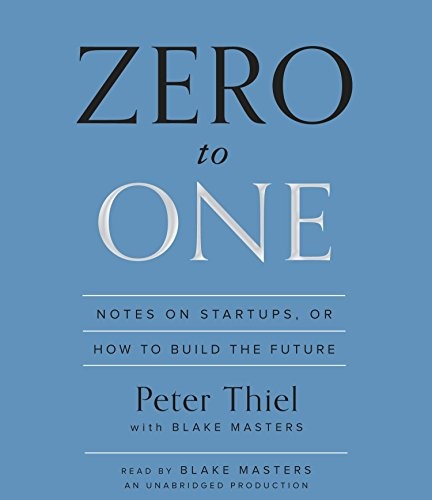
Zero to One
Peter A. Thiel, Blake Masters
Challenges founders to create breakthrough innovation instead of copying, with contrarian insights on building monopolies.
-
The Hard Thing About Hard Things
Ben Horowitz
Shares raw lessons on leadership and tough CEO decisions, helping navigate the unpredictable realities of scaling a company.
Founder activity
Nobody has shelved this yet
Be the first founder to add it.