Book summary
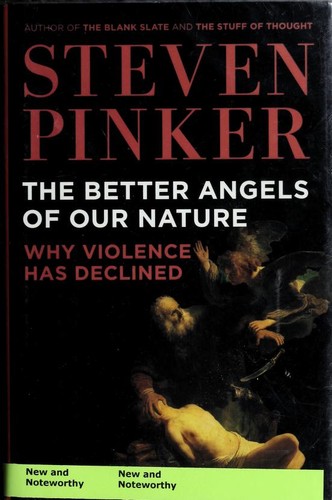
The Better Angels of Our Nature by Steven Pinker argues that violence has dramatically declined over the course of human history and that we are now living in the most peaceful era our species has ever known. Drawing on a wealth of data including graphs and historical records Pinker documents the sharp reduction in wars slavery homicide infanticide and other forms of brutality from prehistoric times through the present showing that rates of violence have fallen at every scale from tribal raids to global conflicts. He attributes this long-term trend to the rise of the state the spread of commerce the power of reason and literacy along with evolving norms and institutions that have amplified humanity's "better angels" such as empathy self-control and moral reasoning while suppressing "inner demons" like revenge and dominance. The book challenges fatalistic views of human nature and modernity insisting that sustained cultural and material progress has steadily steered society away from brutality.
Key founder lessons
-
1
Violence Trends Downward Long-Term
Founders should track metrics showing startup failure rates declining over decades, sustaining optimism despite daily setbacks.
-
2
Leverage the Leviathan Effect
Build strong company culture and processes as an internal 'government' to reduce internal conflicts and unproductive behaviors.
-
3
Expand the Circle of Empathy
Actively include diverse team members, customers, and stakeholders to broaden moral concern and foster inclusive innovation.
-
4
Harness Commerce for Peace
Prioritize win-win business models and partnerships that create mutual gains, reducing zero-sum competition.
-
5
Apply Reason and Self-Control
Use data-driven decisions and deliberate reflection to override impulsive reactions in high-stakes startup situations.
Grok's review
Brilliant thesis, bloated execution.
Pinker marshals an astonishing array of data to argue that violence has declined dramatically over centuries thanks to reason, commerce, empathy, and strong institutions—ideas every founder should internalize when building teams or markets. The book is relentlessly optimistic and intellectually rich, but it's also padded to excess (nearly 800 pages of graphs, digressions, and repetition) with evidence that sometimes feels cherry-picked or thin for such sweeping claims. Some sections on psychology and history feel dated now, and the Enlightenment triumphalism can come across as naive in a post-2016 world of rising populism. Still, the core insight—that progress is real and fragile—is worth wrestling with; just skim aggressively after the first 300 pages.
Best for: Founders wrestling with human nature and long-term optimism
Similar books
-
Enlightenment now
Steven Pinker, Pablo Hermida Lazcano
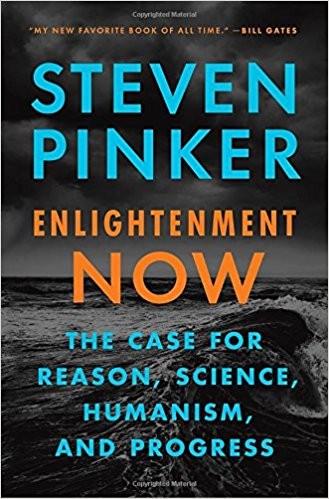
Extends optimism with data on progress, offering founders evidence-based hope and rational decision frameworks.
-
Factfulness
Hans Rosling, Ola Rosling
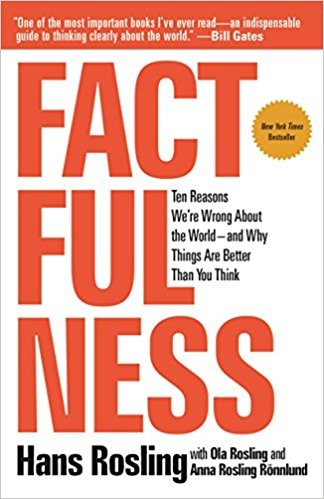
Combats instinctive biases with data, sharpening a founder's ability to make clearer strategic judgments.
-

Thinking, fast and slow
Daniel Kahneman
Reveals cognitive biases, equipping leaders with tools for better decisions under uncertainty.
-

Range
David J. Epstein
Shows why generalists excel in complex worlds, guiding founders toward broader skills and innovation.
-

Atomic Habits
James Clear
Delivers practical systems for building productive routines that scale personal and team performance.
Founder activity
Nobody has shelved this yet
Be the first founder to add it.