
Book summary
Guns Germs and Steel by Jared Diamond is a sweeping exploration of why some societies became wealthy and powerful while others remained poor and weak. Diamond argues that the roots of global inequality lie in environmental and geographic factors rather than racial or cultural superiority specifically the availability of domesticable plants and animals the east-west axes of continents that allowed the spread of crops and technology and the resulting rise of dense populations germs and centralized states. Through comparative history across Eurasia the Americas Africa and Oceania he shows how these initial advantages compounded over millennia into the dramatic disparities visible today. The core argument is that geography shaped the unequal fates of continents long before European colonialism.
Key founder lessons
-
1
Geography drives technological advantage
Founders should map their market's geographic and environmental factors to identify inherent advantages for rapid scaling over competitors.
-
2
Domesticable species enable surplus
Identify and cultivate easily 'domesticable' resources or technologies in your industry that create food-like surpluses for innovation and growth.
-
3
Axis orientation affects diffusion speed
Align product and knowledge spread along east-west axes of least resistance to accelerate adoption across similar markets.
-
4
Germs as unintended weapons
Anticipate and leverage invisible competitive edges like network effects or data moats that weaken rivals without direct confrontation.
-
5
Eurasian luck shaped inequality
Recognize that early luck in founding conditions compounds; relentlessly convert initial advantages into self-reinforcing systems.
Grok's review
Brilliant thesis, bloated execution.
Guns, Germs, and Steel delivers a compelling geographic-determinist explanation for why some societies conquered others—Eurasia's east-west axis, domesticable species, and early agriculture created massive head starts that snowballed into guns, germs, and steel. For startup founders it's a masterclass in first-principles thinking, path dependence, and why 'timing' and 'luck' often mask deeper structural advantages. However, the book is padded with repetitive anecdotes, relies on evidence that's now decades old and sometimes thin, and overreaches by downplaying culture, institutions, and individual agency almost entirely. It's worth reading once for the big idea, but don't treat it as gospel; modern critiques from economic historians have poked serious holes in its determinism.
Best for: Founders wrestling with why some markets or companies win early and stay ahead.
Similar books
-
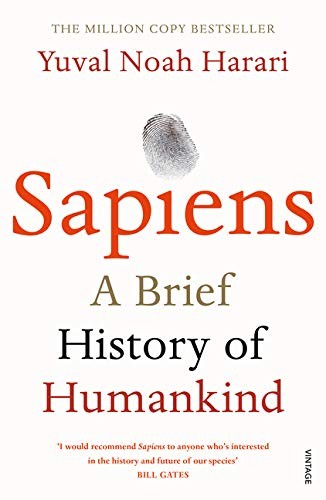
Sapiens
Yuval Noah Harari
Reveals how myths and narratives shape societies, offering founders lessons on building culture and scaling ideas.
-

The better angels of our nature
Steven Pinker
Shows long-term decline in violence through data and reason, teaching founders about progress and evidence-based decision making.
-

Why Nations Fail
Daron Acemoglu, James A. Robinson
Explains how inclusive institutions drive prosperity, with direct parallels to creating successful organizational structures.
-

The origins of political order
Francis Fukuyama
Traces how institutions evolve, providing insights on building scalable systems and governance in growing companies.
-
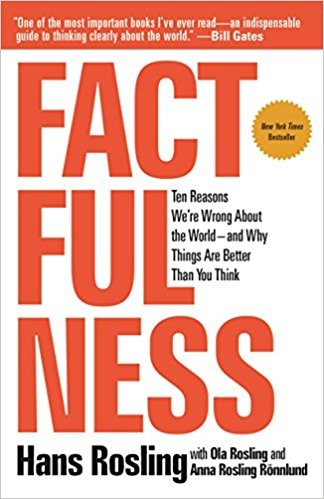
Factfulness
Hans Rosling, Ola Rosling
Trains clear thinking with data against instincts, essential for founders navigating uncertainty and market realities.
-

The Third Chimpanzee
Jared Diamond
Explores human uniqueness and behavior, yielding lessons on innovation, risk, and competitive advantage in business.
Founder activity
Nobody has shelved this yet
Be the first founder to add it.