
Book summary
The Origins of Political Order by Francis Fukuyama traces the historical development of political institutions from prehuman times through the French and American revolutions. It argues that stable modern states rest on three pillars: a capable centralized state, the rule of law that constrains rulers, and accountable government, and that these elements evolved independently across civilizations with varying success. China developed an early modern state but lacked the rule of law or accountability, while Europe achieved stronger legal and accountability mechanisms partly through the influence of religion and feudalism. Fukuyama's core argument is that political order is not a natural or automatic outcome of economic or social modernization but the contingent product of specific historical sequences and cultural legacies that continue to shape differences among contemporary societies.
Key founder lessons
-
1
Build accountable institutions early
Founders who create transparent governance from day one prevent the patrimonialism that doomed many historical states in the book.
-
2
Balance state, law, and accountability
Fukuyama shows successful orders require all three; founders must institutionalize checks beyond charismatic leadership to scale sustainably.
-
3
Avoid patrimonial recruitment
Hiring based on kinship or loyalty, as in pre-modern empires, erodes merit and innovation—founders should prioritize competence over personal ties.
-
4
Adapt institutions to local conditions
No universal path to order exists; founders must tailor strategies to their specific cultural and historical context rather than copying Silicon Valley models.
-
5
Anticipate decay without renewal
All political systems naturally decay into corruption; founders must embed mechanisms for periodic reform to maintain long-term organizational vitality.
Grok's review
Dense history lesson with limited startup payoff.
Fukuyama delivers a sweeping, ambitious tour of how states, rule of law, and accountability emerged across civilizations from ancient China to the French Revolution. The core insight—that political order rests on three pillars that rarely align—is genuinely useful for understanding why institutions are so sticky and hard to change. But the book is padded with long historical detours that feel like academic throat-clearing, some of the evidence feels selectively thin, and parts already feel dated in a post-2010s world of populism and state decay. For startup founders it's a solid intellectual stretch but rarely delivers the kind of crisp, applicable frameworks you get from more focused strategy or psychology reads.
Best for: Founders obsessed with institutions and long-term societal dynamics.
Similar books
-

The Narrow Corridor
Daron Acemoglu, James A. Robinson
Explores how liberty emerges from state-society balance, offering lessons on building adaptive institutions for startups.
-

Why Nations Fail
Daron Acemoglu, James A. Robinson
Analyzes inclusive vs. extractive institutions, providing insights on creating sustainable company cultures and incentives.
-

The WEIRDest People in the World
Joseph Patrick Henrich, Joseph Henrich
Traces cultural evolution shaping psychology, with lessons on fostering innovation and cooperation in teams.
-

Guns, Germs, and Steel
Jared Diamond
Examines geography and environment's role in development, teaching strategic thinking for scaling ventures.
-
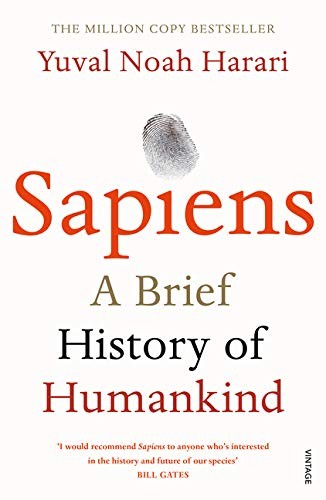
Sapiens
Yuval Noah Harari
Reveals how myths and stories enable large-scale cooperation, vital for aligning company vision and culture.
-

The better angels of our nature
Steven Pinker
Charts decline of violence through institutions and reason, highlighting leadership principles for ethical scaling.
Founder activity
Nobody has shelved this yet
Be the first founder to add it.