
Book summary
The Narrow Corridor is about the historical struggle to achieve and maintain liberty as societies balance state power against societal mobilization. Acemoglu and Robinson argue that freedom emerges only in a narrow corridor where a strong but accountable state coexists with an empowered civil society capable of constraining it, a balance they call the Red Queen effect in which both sides must constantly run to stay in place. They contrast this with extractive paths where either an overly powerful state dominates society or a weak state allows elites to prey on the population. The core argument is that liberty is fragile, rare, and requires perpetual vigilance and contestation rather than being a natural or inevitable outcome of development.
Key founder lessons
-
1
Build liberty in the narrow corridor
Founders must foster inclusive institutions that balance state power with societal mobilization to avoid extractive traps.
-
2
Cultivate countervailing societal power
Entrepreneurs should encourage civic engagement and norms that check concentrated authority, mirroring the book's Red Queen effect.
-
3
Avoid the authoritarian Leviathan
Startup leaders must resist creating overly strong hierarchies that stifle innovation, as seen in historical despotic states.
-
4
Escape the absent Leviathan
Founders need to build sufficient governance and rules to prevent chaos, drawing from societies lacking centralized power.
-
5
Embrace creative destruction carefully
Pursue Schumpeterian innovation while ensuring it strengthens inclusive institutions rather than entrenching elites.
Grok's review
Liberty's tightrope: worth the trek but padded.
The Narrow Corridor delivers a compelling framework: societies thrive only in the narrow space where state and society keep each other in check, creating the liberty that lets innovation and markets flourish. Acemoglu and Robinson weave history, economics, and political theory into a sweeping narrative that explains why some nations stagnate while others (barely) advance. For founders it's a useful mental model for understanding the institutional undercurrents that can suddenly choke or unleash entrepreneurial energy. Weaknesses are real: the book is badly padded with repetitive examples, the evidence often feels cherry-picked or overly broad, and some of the historical analogies already feel dated in a world reshaped by tech platforms and authoritarian capitalism. Still, the core insight on the constant tug-of-war between power and constraint is sharp and relevant to anyone scaling a company in uncertain political terrain.
Best for: Founders wrestling with regulation, geopolitics, or institutional risk.
Similar books
-

Why Nations Fail
Daron Acemoglu, James A. Robinson
Explores how institutions shape prosperity, offering deep lessons on building scalable, sustainable organizations.
-

THE ENTREPRENEURIAL STATE
Mariana Mazzucato
Reveals government's role in innovation, teaching founders how to partner with ecosystems for breakthrough growth.
-
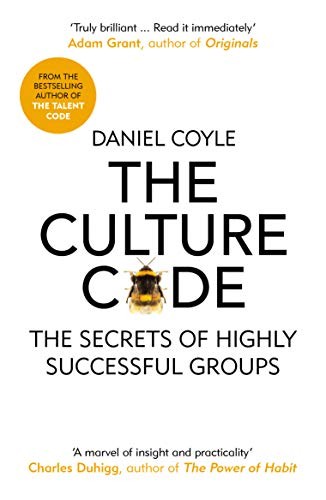
The culture code
Daniel Coyle
Shows how to build high-performing teams and cultures that foster trust, creativity, and long-term success.
-
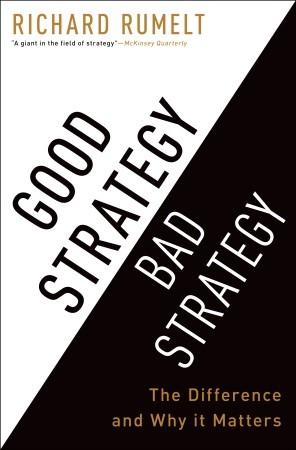
Good Strategy, Bad Strategy
Richard P. Rumelt
Teaches rigorous strategic thinking to navigate complexity and create real competitive advantage.
-

The dictator's handbook
Bruce Bueno de Mesquita, Alastair Smith
Uses political logic to illuminate power dynamics, helping leaders manage incentives and coalitions effectively.
-

Atomic Habits
James Clear
Delivers practical systems for building disciplined teams and personal productivity that compound into major results.
Founder activity
Nobody has shelved this yet
Be the first founder to add it.