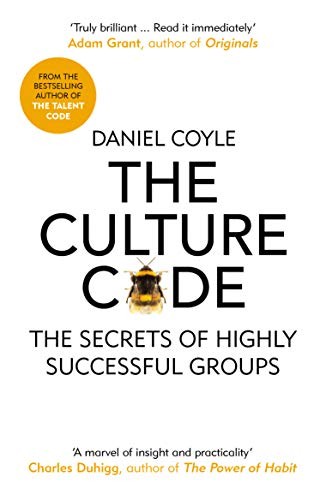
Book summary
The Culture Code by Daniel Coyle explores what makes certain groups exceptionally successful by examining elite organizations like Pixar, the San Antonio Spurs, and Navy SEAL Team Six. Coyle identifies three core skills that build strong culture: creating safety through belonging cues, sharing vulnerability to foster trust, and establishing purpose with clear narratives and expectations. He argues that culture is not an inherent trait but a set of deliberate actions and signals that generate cohesion, spark collaboration, and enable groups to perform as a single mind, offering practical strategies while warning against common pitfalls like toxic behaviors. Ultimately the book provides a roadmap for leaders to intentionally shape environments where innovation thrives and collective goals are exceeded.
Key founder lessons
-
1
Build Safety First
Founders create belonging by sending signals of connection and vulnerability, as in Pixar's feedback sessions, to make teams feel psychologically safe.
-
2
Share Vulnerability
Leaders model fallibility to build trust, like SEAL Team Six commanders admitting mistakes, accelerating cooperation and openness in startups.
-
3
Establish Group Purpose
Articulate a clear, shared goal with high standards, as the Spurs do with their 'one team' mantra, to align and motivate startup teams.
-
4
Use Catchphrases Repeatedly
Craft and repeat simple slogans that embody values, like Zappos' 'Deliver WOW', to reinforce culture and guide daily founder decisions.
-
5
Embrace Collision
Design physical and interaction spaces for frequent unplanned encounters, as at Pixar, to spark creativity and serendipitous problem-solving.
Grok's review
Solid on belonging, padded on science and repetition.
Coyle is a good storyteller who visits Pixar, SEAL Team Six, and the Spurs and extracts three legible principles—build safety, share vulnerability, establish purpose—that actually stick with founders. The anecdotes are crisp, the frameworks are immediately usable in early-stage teams, and the emphasis on psychological safety predates Google's big study, which is useful. Weaknesses are real: the book is padded with repetitive examples, some evidence feels cherry-picked or thin (jewel-thief stories as serious data?), and a few ideas already felt dated by 2018. Still, it's one of the better culture books that doesn't waste a technical CEO's time. Worth reading once, skimmable on re-read.
Best for: Founders scaling their first 20–80 people
Similar books
-

High Output Management
Andrew S. Grove
Teaches practical management and team culture principles for scaling high-performing organizations.
-
The Hard Thing About Hard Things
Ben Horowitz
Offers raw insights on leadership challenges and building resilient company cultures under pressure.
-

Good to Great
Collins, James C., Jim Collins
Reveals how disciplined leadership and culture drive companies from good to truly great.
-

Radical Candor
Kim Malone Scott
Provides a framework for building trust and open communication essential to strong team cultures.
-

Turn the Ship Around!: A True Story of Turning Followers into Leaders
L. David Marquet, Stephen R. Covey
Shows how empowering teams through leader-leader culture transforms organizations and boosts performance.
-

Creativity, Inc.
Ed Catmull, Amy Wallace
Explores fostering creative cultures and psychological safety at Pixar, with lessons for innovative teams.
Founder activity
Nobody has shelved this yet
Be the first founder to add it.