Book summary
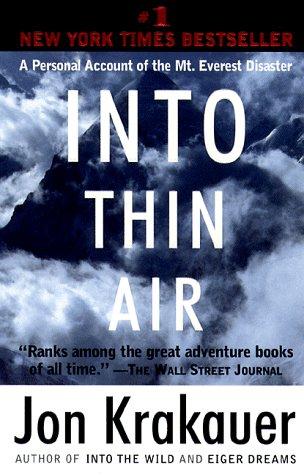
Into Thin Air is Jon Krakauer's firsthand account of the disastrous 1996 Mount Everest expedition in which eight climbers died during a sudden storm near the summit. As a journalist and participant embedded with one of the commercial guiding teams, Krakauer reconstructs the events leading to the tragedy, detailing the physical toll of extreme altitude, the dangers of inexperience, and the fatal decisions made under oxygen deprivation and deteriorating weather. The book serves as both a gripping adventure narrative and a critique of the commercialization of Everest, which turned the mountain into a crowded, high-risk tourist destination. Krakauer's core argument is that hubris, inadequate preparation, and the profit-driven guiding industry contributed heavily to the deadliest season in the mountain's history.
Key founder lessons
-
1
Overconfidence kills in high-stakes environments
Founders must recognize when hubris and summit fever override risk assessment, just as experienced climbers ignored deteriorating weather on Everest.
-
2
Poor team leadership amplifies disaster
Startup leaders should enforce clear decision rights and veto power like a strong expedition leader, rather than deferring to clients or weak hierarchies.
-
3
Cut losses early when conditions worsen
Apply the same ruthless turnaround as turning back from the summit at the agreed time, avoiding sunk-cost fallacy when market signals or execution falter.
-
4
Oxygen deprivation clouds judgment
Founders under extreme pressure must build in buffers and external checks, mirroring how hypoxia led smart climbers to fatal errors on the mountain.
-
5
Commercialization distorts risk calculus
Treat paying customers or investors with extreme caution, as turning Everest into a guided business diluted accountability and safety standards.
Grok's review
Survival tale with founder-level lessons on hubris.
Into Thin Air is a gripping first-person account of the 1996 Everest disaster that reads like a high-stakes product launch gone catastrophically wrong: overconfident leaders, ignored warning signs, and ego-driven decisions under extreme pressure. Krakauer excels at raw storytelling and dissecting how groupthink and commercial pressures turned a calculated risk into tragedy—reminders every founder chasing hypergrowth should absorb. Its weaknesses are real: some sections feel padded with mountaineering minutiae that dilute momentum, the evidence is anecdotal rather than systematic, and its late-90s lens on adventure tourism feels dated in today's risk-management obsessed world. Still, the core dissection of leadership failure under duress makes it worth the read for anyone scaling teams or products into dangerous territory.
Best for: Founders wrestling with overconfidence and high-stakes execution.
Similar books
-

The climb
Anatoli Boukreev, G. Weston Dewalt
Gripping Everest survival tale offering leadership lessons under extreme pressure and crisis.
-

Endurance
Alfred Lansing, Elena Grau
Shackleton's Antarctic odyssey teaches resilience, team management, and adaptive decision-making for startups.
-

Touching the void
Joe Simpson, Joe Simpson
Raw mountaineering survival story highlighting risk assessment, trust, and mental toughness in ventures.
-

The Right Stuff
Tom Wolfe
Test pilots' high-stakes world reveals courage, excellence, and handling failure in innovative fields.
-

Sapiens
Yuval Noah Harari
Broad human history with insights on culture, cooperation, and scaling organizations like companies.
-

Shoe Dog
Phil Knight
Nike founder's memoir of grit, pivots, and building a global brand through relentless adventure.
Founder activity
Nobody has shelved this yet
Be the first founder to add it.