
Book summary
The Essays of Warren Buffett is a curated collection of Warren Buffett's annual letters to Berkshire Hathaway shareholders edited by Lawrence Cunningham to highlight his key principles on business management investing and corporate governance. The book distills Buffett's plainspoken wisdom on topics like valuing companies selecting managers allocating capital and avoiding common Wall Street pitfalls emphasizing long-term thinking over short-term speculation. At its core the work argues that successful investing stems from treating ownership as a business partnership grounded in understanding intrinsic value patience and ethical stewardship rather than following market fads or complex financial models.
Key founder lessons
-
1
Prioritize owner earnings over reported earnings
Founders should focus on true cash generation potential rather than accounting profits, as Buffett dissects how GAAP can mislead in his letters.
-
2
Buy wonderful businesses at fair prices
Seek companies with durable competitive advantages and understandable models instead of chasing cheap but mediocre ones, per Buffett's investment criteria.
-
3
Treat shareholders as true partners
Communicate transparently and honestly in letters, avoiding accounting tricks or hype to build long-term trust like Berkshire does.
-
4
Embrace a long-term holding mindset
Ignore quarterly noise and market fluctuations; hold outstanding businesses indefinitely unless fundamentals change fundamentally.
-
5
Insist on rational capital allocation
Evaluate every dollar reinvested, acquired, or returned based on its ability to compound intrinsic value over time.
Grok's review
Timeless wisdom, but padded and pre-startup.
The book distills Buffett's shareholder letters into thematic essays on valuation, governance, moats, and managerial integrity; the investing and capital allocation sections remain razor-sharp and full of quotable common sense that every founder who ever wants to raise money or sell should absorb. Its main weakness is padding—repetitive phrasing across letters that Cunningham didn't edit aggressively enough, plus ideas rooted in 20th-century conglomerates that feel distant from today's venture-backed, blitz-scaling startups. Evidence is mostly Buffett's own track record, which is persuasive but anecdotal and occasionally dated (pre-internet era examples). Still worth the time if you treat it as a masterclass in long-term thinking rather than a tactical playbook.
Best for: Founders who want to think like owners, not just operators.
Similar books
-

Poor Charlie's Almanack
Charles T. Munger, Charles T. Munger
Munger's multidisciplinary wisdom on investing, decision-making, and business mirrors Buffett's essays with practical mental models.
-

The Intelligent Investor
Benjamin Graham
Timeless value investing principles from Buffett's mentor, emphasizing rational decision-making and long-term business thinking.
-

Principles
Ray Dalio
Dalio shares radical truth and transparency in management, with frameworks for building exceptional companies and careers.
-

The Outsiders
S. E. Hinton, Jim Fyfe
Profiles of unconventional CEOs who excel at capital allocation, offering actionable lessons in strategic leadership.
-

Seeking Wisdom
Peter Bevelin
Explores mental models from Buffett and Munger, enhancing judgment and problem-solving for founders.
-
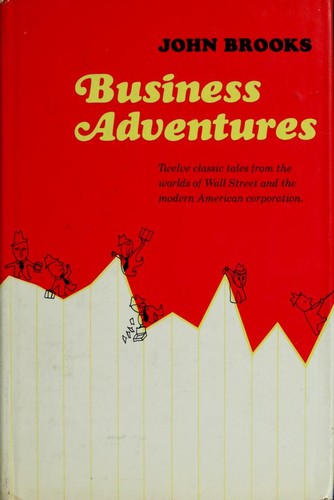
Business adventures
John Brooks
Classic stories of corporate successes and failures that deliver enduring insights on management and markets.
Founder activity
Nobody has shelved this yet
Be the first founder to add it.