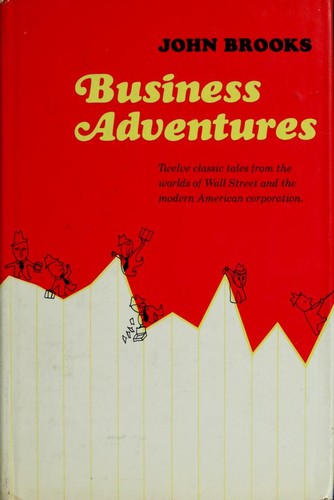
Book summary
Business Adventures by John Brooks is a collection of twelve true Wall Street stories drawn from the author's New Yorker articles of the 1960s, each illustrating a different aspect of corporate and financial life. Through vivid case studies such as the Xerox rise, the Ford Edsel disaster, the Texas Gulf Sulphur insider-trading scandal, and the 1962 stock-market crash, Brooks reveals how human psychology, chance, and institutional flaws repeatedly drive business outcomes. The core argument is that despite sophisticated models and forecasts, business remains fundamentally unpredictable and is best understood through narrative and historical example rather than rigid theory. The book remains a favorite of investors like Warren Buffett and Bill Gates for its timeless lessons on hubris, ethics, and market behavior.
Key founder lessons
-
1
Customer loyalty trumps price wars
Brooks shows how IBM held market share against cheaper rivals by building deep customer relationships and trust, a lesson for founders prioritizing retention over discounting.
-
2
Market perception drives stock value
In the Xerox case, Brooks illustrates how investor sentiment and narrative can inflate or deflate valuations far beyond fundamentals, urging founders to manage storytelling carefully.
-
3
Regulation can reshape industries
The book details how government intervention in the 1960s stock markets altered trading rules and competition, teaching founders to anticipate and adapt to regulatory shifts.
-
4
Innovation requires execution discipline
Through the Ford Edsel failure, Brooks highlights that even bold product ideas collapse without rigorous market research and operational follow-through.
-
5
Ethical shortcuts invite disaster
Brooks recounts scandals like the Texas Gulf Sulphur insider trading case, warning founders that cutting ethical corners leads to legal and reputational ruin.
Grok's review
Dated but still insightful business storytelling.
Business Adventures is a collection of long New Yorker-style pieces from the 1960s that read like elegant case studies on corporate folly, market mania, and executive missteps. What works is Brooks' sharp eye for human drama inside big companies; the Xerox, Ford Edsel, and Piggly Wiggly stories remain gripping illustrations of how incentives, ego, and information asymmetry actually play out. What doesn't work is the padding (some pieces feel stretched to magazine length), the occasionally thin evidence (it's journalism, not rigorous research), and how several chapters feel quaint or irrelevant in a software-driven startup world. It's worth a founder's time if you enjoy narrative history, but don't treat it as a modern playbook.
Best for: Founders who love business history and long-form storytelling.
Similar books
-

The Intelligent Investor
Benjamin Graham
Timeless lessons on value investing, risk, and market psychology that inform better business and capital allocation decisions.
-
Fooled by randomness
Nassim Nicholas Taleb
Explores luck, uncertainty, and human bias in markets and life, sharpening decision-making under unpredictability.
-

Thinking, fast and slow
Daniel Kahneman
Illuminates cognitive biases and decision traps that affect founders, investors, and everyday business choices.
-

The Psychology of Money
Morgan Housel
Timeless behavioral insights on wealth, greed, and happiness that translate directly to startup and career success.
-

Poor Charlie's Almanack
Peter D. Kaufman
Charlie Munger's multidisciplinary mental models for clearer thinking, better judgments, and long-term business advantage.
Founder activity
Nobody has shelved this yet
Be the first founder to add it.