
Book summary
Poor Charlie's Almanack by Peter D. Kaufman is a compilation of the wit and wisdom of Charlie Munger, Warren Buffett's longtime partner at Berkshire Hathaway. The book presents Munger's multidisciplinary approach to thinking, drawing from psychology, physics, biology, and other fields to form a latticework of mental models that enable better decision-making in business and life. Its core argument is that worldly success comes from inverting problems, avoiding cognitive biases, and patiently applying a broad range of fundamental principles rather than relying on narrow expertise or shortcuts. Through speeches, anecdotes, and commentary, it portrays Munger as a champion of lifelong learning, rationality, and ethical behavior.
Key founder lessons
-
1
Latticework of Mental Models
Founders build a multidisciplinary framework from psychology, physics, and biology to make better decisions and avoid blind spots, as Charlie emphasizes.
-
2
Invert, Always Invert
Instead of chasing success directly, founders identify and avoid paths to failure, applying this inversion principle to product, hiring, and strategy.
-
3
Circle of Competence
Founders stay within their expertise boundaries, resisting the urge to expand prematurely and partnering only where they truly understand the domain.
-
4
Lollapalooza Effects
Founders recognize how multiple biases and incentives compound to create extreme outcomes, using this to engineer virality or defend against market manias.
-
5
Margin of Safety
Founders build buffers in capital, timelines, and assumptions to protect against the inevitable miscalculations and black swans in startup life.
Grok's review
Brilliant but bloated; worth the slog for mental models.
Poor Charlie's Almanack is a dense, opinionated masterclass in multidisciplinary thinking drawn from Charlie Munger's speeches and writings, heavy on latticework of mental models from psychology, physics, biology, and investing that every founder should internalize to avoid stupidity and build antifragile businesses. What works brilliantly is the emphasis on inversion ('invert, always invert'), second-order thinking, and recognizing cognitive biases—tools that sharpen decision-making far better than most startup fare. Weaknesses are real: it's padded with repetitive transcripts, some ideas feel dated in a post-2008 tech world, and the evidence is often anecdotal rather than rigorous data-driven. Still, for founders it's a high-ROI grind that rewards multiple reads; skip the fluff and extract the frameworks.
Best for: Founders seeking better judgment and edge in decision-making.
Similar books
-

Seeking Wisdom
Peter Bevelin
Deepens multidisciplinary thinking and mental models like Charlie Munger's approach.
-
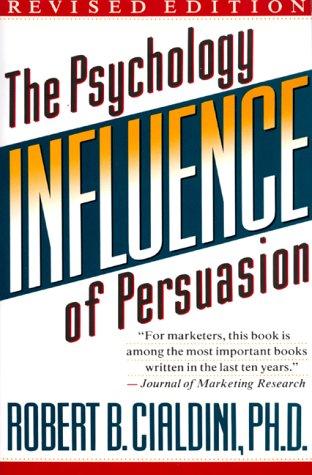
Influence
Robert B. Cialdini
Masterclass in understanding human behavior crucial for sales, marketing, and leadership.
-

Thinking, fast and slow
Daniel Kahneman
Reveals cognitive biases and decision systems to improve founder judgment.
-

Principles
Ray Dalio
Systematic approach to decision-making and building exceptional organizations.
-
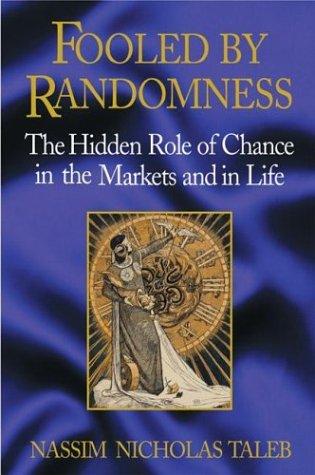
Fooled by randomness
Nassim Nicholas Taleb
Explores luck, uncertainty, and decision-making under opacity relevant to startups.
Founder activity
Nobody has shelved this yet
Be the first founder to add it.