
Book summary
Seeking Wisdom by Peter Bevelin is a multidisciplinary exploration of how humans think, why we make misjudgments, and how to cultivate clearer reasoning and better decision-making. Drawing heavily on Charles Munger’s mental models along with insights from Darwin, Einstein, Feynman, Montaigne, Buffett, and many others, the book catalogs the main cognitive biases, psychological tendencies, and environmental factors that distort our thinking and lead us into predictable errors. Bevelin’s core argument is that while we cannot eliminate mistakes, we can systematically reduce the frequency and severity of those that cause serious harm by studying the patterns behind them and deliberately applying tools and principles of wisdom. The result is a practical guide for avoiding the “roads that lead to unhappiness” in both business and life.
Key founder lessons
-
1
Master mental models from multiple disciplines
Founders build a latticework of models from psychology, physics, biology, and math like Munger to recognize patterns and avoid narrow thinking in decisions.
-
2
Invert: focus on what to avoid
Like Munger's 'tell me where I'll die so I never go there,' founders list and steer clear of stupidity, misery, and business failure paths first.
-
3
Understand psychological biases and tendencies
Founders study innate biases like reciprocity, social proof, and overconfidence from the book to spot when emotions distort startup judgments and hiring.
-
4
Learn from mistakes and correct them fast
Drawing from Confucius and Darwin, founders treat errors as tuition, rapidly updating beliefs and processes to compound wisdom over time.
-
5
Simplify and seek clear thinking
Founders emulate Montaigne, Feynman, and Buffett by reducing problems to first principles, avoiding jargon, and focusing on what truly matters for product and strategy.
Grok's review
Dense wisdom anthology, padded with quotes.
Seeking Wisdom is a sprawling compendium of mental models, cognitive biases, and multidisciplinary insights drawn heavily from Charlie Munger, Warren Buffett, Darwin, Feynman, and a cast of dozens more. For startup founders it shines when distilling inversion, first principles, and psychological pitfalls that doom decisions under pressure; the sections on misjudgment and incentives are genuinely useful. However, it's weakened by repetition, an overwhelming barrage of loosely organized quotations that start to feel like filler, and a dated 2003 vibe with thin original evidence—many ideas are simply excerpted rather than synthesized. It's worth the slog if you treat it as a lifelong reference rather than a linear read, but it demands active filtering to extract signal from the noise.
Best for: Munger-obsessed operators building mental toolkits
Similar books
-

Poor Charlie's Almanack
Charles T. Munger, Charles T. Munger
Expands on multidisciplinary mental models for better decision-making in business and life.
-

The Psychology of Money
Morgan Housel
Reveals timeless lessons on behavior, risk, and wealth-building applicable to founders.
-

Thinking, fast and slow
Daniel Kahneman
Deep insights into cognitive biases to improve judgment and strategic choices.
-

Principles
Ray Dalio
Practical framework for radical truth and decision-making in building exceptional organizations.
-
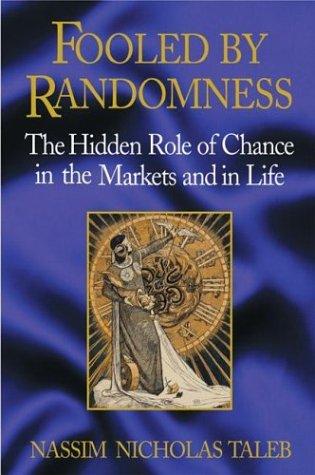
Fooled by randomness
Nassim Nicholas Taleb
Explores luck, uncertainty, and human error to build antifragile careers and companies.
-

The essays of Warren Buffett
Warren Buffett, Lawrence A. Cunningham
Distills investing wisdom and business principles from letters that shape long-term success.
Founder activity
Nobody has shelved this yet
Be the first founder to add it.