
Book summary
Poor Charlie's Almanack is a compilation of wisdom from Charlie Munger, Warren Buffett's longtime partner at Berkshire Hathaway, drawing from his speeches, essays, and interviews over decades. It explores his multidisciplinary approach to thinking, emphasizing the "latticework" of mental models from fields like psychology, physics, biology, and economics to make better decisions and avoid cognitive biases. The core argument is that worldly success comes from inverting problems, embracing lifelong learning, and applying a few big ideas across disciplines rather than relying on narrow expertise, all delivered with Munger's signature wit and contrarian insights on business, investing, and life.
Key founder lessons
-
1
Master Multidisciplinary Mental Models
Build a latticework of models from psychology, physics, biology, and math to avoid narrow thinking and spot opportunities others miss.
-
2
Invert Problems Ruthlessly
Instead of asking how to succeed, ask what would cause failure and systematically avoid those behaviors, as Munger did in investing.
-
3
Exploit Lollapalooza Effects
Combine multiple psychological biases and incentives to create extreme outcomes, using this in product design and team motivation.
-
4
Practice Extreme Patience
Wait for the fat pitch with a high-conviction edge rather than chasing mediocre deals, mirroring Munger and Buffett's long-term approach.
-
5
Seek Worldly Wisdom Over Specialization
Continuously expand your circle of competence across fields to make better decisions and avoid the man-with-a-hammer problem.
Grok's review
Munger's mental models goldmine, but bloated and preachy.
Poor Charlie's Almanack is a sprawling, opinionated tour through Charlie Munger's latticework of mental models, drawn from psychology, physics, biology, and investing. What works brilliantly is the emphasis on multidisciplinary thinking, inversion, and avoiding cognitive biases—ideas that have directly shaped how many founders approach strategy, hiring, and capital allocation. The weaknesses are real: it's heavily padded with repetitive speeches, folksy anecdotes, and dated references that haven't aged perfectly since the early 2000s; the evidence is often anecdotal or borrowed rather than rigorously tested, and Munger's curmudgeonly style can veer into self-satisfied lecturing. Still, for startup founders it's worth the slog because the core insights on second-order thinking and building durable mental frameworks are timeless and under-applied in Silicon Valley hype cycles.
Best for: Founders seeking deeper strategic thinking
Similar books
-

Seeking Wisdom
Peter Bevelin
Distills multidisciplinary mental models from Munger to improve judgment and business thinking.
-
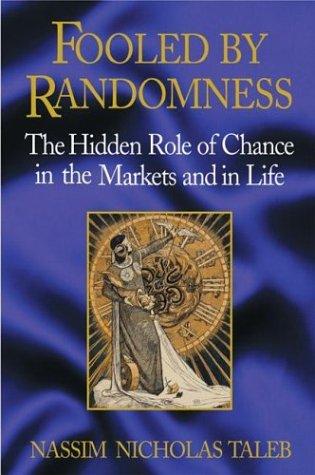
Fooled by randomness
Nassim Nicholas Taleb
Reveals how luck and randomness shape success, sharpening founder resilience and strategy.
-

Thinking, fast and slow
Daniel Kahneman
Unpacks cognitive biases and decision traps that founders encounter daily.
-

The essays of Warren Buffett
Warren Buffett, Lawrence A. Cunningham
Buffett's shareholder letters curated into timeless lessons on management and investing.
-
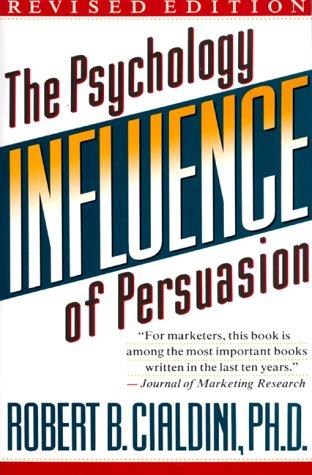
Influence
Robert B. Cialdini
Master the principles of persuasion essential for sales, marketing, and leadership.
Founder activity
Nobody has shelved this yet
Be the first founder to add it.