
Book summary
The Intelligent Investor by Benjamin Graham is a foundational guide to value investing that teaches readers to approach the stock market with discipline emotional control and a focus on long-term security rather than speculation. Graham distinguishes between investment and speculation emphasizing the importance of buying stocks only when they trade well below their intrinsic value to create a margin of safety against errors or market downturns. The core argument is that intelligent investing relies on fundamental analysis thorough research and a defensive mindset that prioritizes capital preservation over get-rich-quick schemes ultimately shielding investors from substantial losses while enabling steady gains over time. Updated editions include modern commentary to illustrate how these timeless principles apply to contemporary markets.
Key founder lessons
-
1
Margin of Safety First
Calculate intrinsic value conservatively and only buy when price is at least 33% below it to protect against errors.
-
2
Mr. Market is Manic
Ignore daily price swings as Mr. Market's emotional offers; transact only when they serve your valuation.
-
3
Defensive Investor Rules
Allocate 50% bonds and 50% stocks or adjust within 25-75% range based on market levels, favoring index funds.
-
4
Avoid Speculation
Distinguish investing from speculation by requiring thorough analysis and adequate safety margin before buying.
-
5
Emotional Discipline Wins
Master your own temperament to resist greed and fear, enabling long-term adherence to value principles.
Grok's review
Timeless principles, but a slog for founders.
Graham's core lesson—treat stocks as businesses, demand a margin of safety, and ignore Mr. Market's mood swings—remains one of the sharpest mental models any founder can adopt for capital allocation and valuation. The book's strength is its psychological discipline; it inoculates you against hype cycles that kill startups. Yet it's padded with repetitive examples from the 1930s–60s, outdated bond math that feels irrelevant in a SaaS world, and thin empirical evidence compared to modern behavioral finance. Most founders will skim two-thirds of it and still extract the juice, but the prose is dry and the context alien. Worth the effort if you want to think like a serious investor rather than a momentum chaser.
Best for: Founders raising capital or managing treasury.
Similar books
-

Poor Charlie's Almanack
Charles T. Munger, Charles T. Munger
Munger's multidisciplinary mental models sharpen investment and business decision-making like Graham's principles.
-

The Outsiders
S. E. Hinton, Jim Fyfe
Reveals how unconventional CEOs create outsized value through capital allocation, echoing Graham's value focus.
-

Thinking, fast and slow
Daniel Kahneman
Exposes cognitive biases in judgment, directly improving the rational analysis Graham championed.
-

A Man for All Markets
Edward O. Thorp
Thorp's quantitative edge in investing and gambling offers practical lessons in probabilistic thinking for founders.
-

Principles
Ray Dalio
Dalio's systematic approach to decision-making and organizational building builds on Graham's disciplined mindset.
-
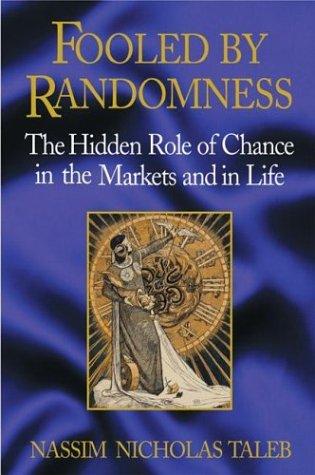
Fooled by randomness
Nassim Nicholas Taleb
Highlights the role of luck and uncertainty in success, complementing Graham's margin of safety philosophy.
Founder activity
Nobody has shelved this yet
Be the first founder to add it.