
Book summary
A Man for All Markets is the autobiography of Edward O. Thorp, the mathematician who pioneered the use of quantitative methods in both gambling and investing. The book recounts how he developed card-counting systems that beat blackjack, invented the first wearable computer to beat roulette, and then applied similar probabilistic and statistical edge-seeking techniques to the stock market, founding the first quantitative hedge fund. Its core argument is that rigorous mathematics, disciplined risk management, and the search for true edges can produce consistent outperformance in any probabilistic arena, whether casinos or capital markets, while warning against the illusions of random success and Wall Street hype. Thorp presents himself as living proof that intellectual honesty and scientific thinking triumph over intuition and crowd behavior.
Key founder lessons
-
1
Quantify edge before betting
Thorp used probability math to identify positive expected value in blackjack, teaching founders to rigorously calculate product-market fit and unit economics before scaling investment.
-
2
Exploit inefficiencies relentlessly
By counting cards and later spotting mispricings in warrants and options, Thorp showed founders how to systematically hunt for and arbitrage market gaps others overlook.
-
3
Build portable quantitative tools
Inventing the first wearable computer to beat roulette demonstrated that founders should create proprietary tech or models that give a repeatable, mobile edge over competitors.
-
4
Diversify to survive variance
Thorp's Princeton Newport Partners hedged multiple uncorrelated strategies, reminding founders to spread risk across products, channels, and bets so one failure doesn't end the venture.
-
5
Stay ethical amid temptation
Thorp walked away from crooked casinos and later exposed Wall Street fraud, urging founders to maintain integrity and long-term thinking even when short-term gains tempt rule-breaking.
Grok's review
Brilliant mind, padded autobiography.
Thorp's story is genuinely compelling: a math genius who beat Vegas card-counting, built the first wearable computer, then crushed Wall Street with quantitative hedge funds decades before it was cool. The early sections on probability, blackjack, and inventing the portable computer with Claude Shannon crackle with insight that any founder who loves first-principles thinking will devour. But the book suffers from padding—too many repetitive anecdotes, name-dropping, and self-congratulatory asides that dilute the signal. Some of the market-beating techniques feel dated in today's high-frequency, AI-driven markets, and the evidence is mostly 'trust me, it worked' rather than rigorous case studies. Still, the core lessons on risk, edge, and intellectual honesty are timeless and valuable for founders who want to think like elite investors rather than hype artists.
Best for: Founders obsessed with probability, edge, and beating markets.
Similar books
-
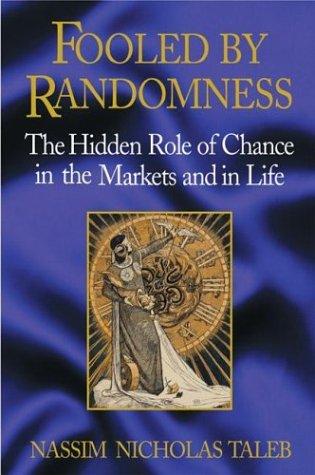
Fooled by randomness
Nassim Nicholas Taleb
Reveals how randomness shapes success and failure, sharpening decision-making under uncertainty.
-

The Psychology of Money
Morgan Housel
Explores timeless behaviors around money and risk that every founder should internalize.
-

Thinking, fast and slow
Daniel Kahneman
Teaches the cognitive biases that distort judgment and strategy in business.
-

The man who solved the market
Gregory Zuckerman
Chronicles Jim Simons' quantitative empire, showing how rigorous process builds outsized results.
-
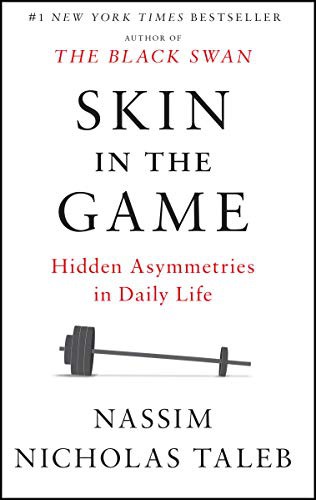
Skin in the Game
Nassim Nicholas Taleb
Emphasizes aligned incentives and personal risk as keys to ethical, durable companies.
-

Principles
Ray Dalio
Offers a systematic approach to decision-making and building world-class organizations.
Founder activity
Nobody has shelved this yet
Be the first founder to add it.