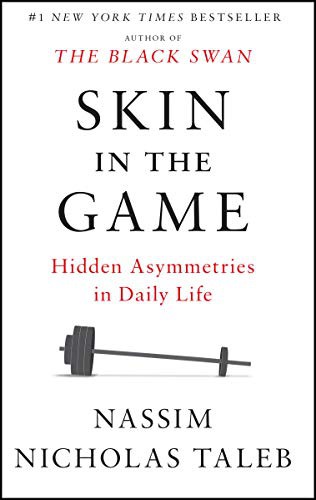
Book summary
Skin in the Game by Nassim Nicholas Taleb argues that true accountability and ethical behavior only emerge when people have personal downside risk or "skin in the game" rather than insulated roles where they reap upside while others bear the costs. Taleb applies this principle across domains from finance and politics to medicine religion and everyday decision-making showing how the absence of skin in the game leads to fragility hidden risks and moral hazard while its presence promotes robustness symmetry and honest behavior. Drawing on history philosophy and statistics he dismantles modern systems run by bureaucrats experts and academics who face no real consequences for their advice or decisions. The core worldview is that symmetry between words and actions plus exposure to harm is the fundamental rule for understanding ethics rationality and the functioning of societies.
Key founder lessons
-
1
Require skin in the game
Founders must ensure advisors, investors, and partners bear downside risk, filtering out those who only talk without personal exposure as per Taleb's core principle.
-
2
Avoid symmetry in decisions
Startup leaders should never accept advice from anyone not sharing the financial or reputational downside, mirroring Taleb's critique of bureaucrats and consultants.
-
3
Embrace antifragility through risk
Founders build companies that gain from volatility by taking calculated personal risks, aligning with Taleb's view that skin in the game drives true innovation and robustness.
-
4
Ignore words, observe actions
Evaluate team members, board members, and pundits solely by their actual bets and exposure rather than narratives, directly from Taleb's emphasis on deeds over speech.
-
5
Apply the Silver Rule
Do not do to others what you would not want done to you; founders avoid inflicting hidden risks on customers or employees without sharing the consequences themselves.
Grok's review
Brilliant core idea, bloated delivery.
Taleb's central thesis—that true alignment comes only when decision-makers bear real downside risk—is pure gold for startup founders navigating investors, advisors, and co-founders who talk a big game but risk nothing. The book shines when it skewers academics, consultants, and bureaucrats with his signature acerbic wit, forcing you to question every recommendation that isn't backed by personal exposure. Unfortunately, it's padded with repetitive rants, ancient historical detours that feel like filler, and evidence that's often anecdotal or selectively interpreted rather than rigorous. The dated jabs at specific political figures and events from 2018 also make parts feel less timeless than the author intends. Still, the insight on symmetry in risk and reward is valuable enough that founders should grapple with it, even if they skim the meandering middle sections.
Best for: Founders evaluating partners and advisors
Similar books
-
Antifragile
Nassim Nicholas Taleb, Genís Sánchez Barberán
Explores thriving in volatility, offering practical lessons for resilient startups and decision-making under uncertainty.
-
Fooled by randomness
Nassim Nicholas Taleb
Reveals how luck and randomness shape success, helping founders avoid overconfidence in business outcomes.
-

The Psychology of Money
Morgan Housel
Uncovers timeless behaviors around risk and wealth that inform smarter startup financing and personal resilience.
-

Thinking, fast and slow
Daniel Kahneman
Decodes cognitive biases, equipping founders with better judgment for strategy, hiring, and negotiations.
-

The Black Swan
Nassim Nicholas Taleb, David Chandler
Teaches preparation for rare, high-impact events that can make or break companies and careers.
-

Principles
Ray Dalio
Outlines radical truth and transparency systems that build robust organizations and decision frameworks.
Founder activity
Nobody has shelved this yet
Be the first founder to add it.