
Book summary
The Man Who Solved the Market by Gregory Zuckerman chronicles the life of Jim Simons, the mathematician and former codebreaker who founded Renaissance Technologies and built the extraordinarily profitable Medallion Fund. Simons pioneered a revolutionary data-driven, algorithmic trading approach that ignored traditional financial analysis in favor of pattern recognition in vast datasets, generating average annual returns of 66 percent since 1988 and over $100 billion in profits. The book details how his secretive team of scientists and mathematicians transformed quantitative investing into a dominant force while Simons himself became a major philanthropist in science, education, and liberal politics. It also explores the unintended consequences as key executive Robert Mercer used his wealth to profoundly influence the Trump campaign, Brexit, and right-wing politics, ultimately showing how Simons's market triumph reshaped finance, science, and society in ways he never anticipated.
Key founder lessons
-
1
Build models from data, not theories
Simons hired mathematicians and scientists to discover hidden statistical patterns in market data instead of relying on economic fundamentals or intuition.
-
2
Hire for raw intellect over domain experience
Renaissance succeeded by recruiting codebreakers, cryptographers, and professors with zero Wall Street background, valuing puzzle-solving ability above trading knowledge.
-
3
Embrace automated, systematic trading
Medallion's 66% average returns came from removing human emotion and executing thousands of small edges via algorithms running 24/7.
-
4
Iterate relentlessly on signals and models
Simons' team constantly tested, refined, and retired trading signals, treating model decay as inevitable and requiring continuous research investment.
-
5
Protect core IP with extreme secrecy
Renaissance's edge depended on compartmentalization, NDAs, and isolation so that even top performers knew only fragments of the full system.
Grok's review
Brilliant quant tale, padded with filler and politics.
Zuckerman delivers a genuinely gripping origin story of Jim Simons and the secretive Renaissance Technologies crew that invented modern quant trading. The core narrative of how a math genius recruited misfit scientists to build Medallion's insane 66% returns is pure catnip for any founder obsessed with building unfair technical advantages. Unfortunately the book is bloated with repetitive anecdotes, thin sourcing on the actual alpha-generating magic (understandably, given the secrecy), and a late-stage detour into Robert Mercer's political exploits that feels like editorial padding rather than essential reading. The 'data-driven revolution sweeping the world' thesis is now dated; today's founders already live in that world. Still, the portrait of relentless iteration, hiring for raw intellect over domain experience, and creating a culture that rewards signal over noise makes it worthwhile.
Best for: Technical founders scaling data-driven products
Similar books
-

The Psychology of Money
Morgan Housel
Explores timeless lessons on wealth, greed, and decision-making under uncertainty, vital for founders.
-
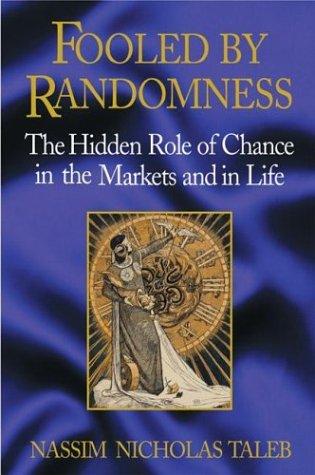
Fooled by randomness
Nassim Nicholas Taleb
Reveals how luck and randomness shape success, sharpening risk awareness in business.
-

Thinking, fast and slow
Daniel Kahneman
Unpacks cognitive biases that derail decisions, essential for better founder judgment.
-

The Outsiders
S. E. Hinton, Jim Fyfe
Profiles CEOs who excel through unconventional capital allocation and strategy.
-

More money than God
Sebastian Mallaby
Chronicles hedge fund pioneers, offering insights on innovation, risk, and market mastery.
-

A Man for All Markets
Edward O. Thorp
Blends math genius with investing success, teaching probabilistic thinking for ventures.
Founder activity
Nobody has shelved this yet
Be the first founder to add it.