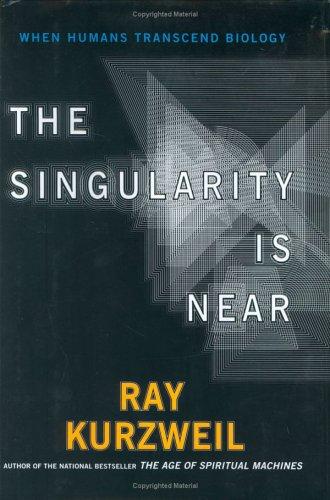
Book summary
The Singularity Is Near by Ray Kurzweil argues that accelerating technological progress in computing, genetics, nanotechnology, and robotics will lead to a point around 2045 when human and machine intelligence merge, creating a superintelligence that transforms every aspect of human life and solves problems like disease, poverty, and environmental degradation. Kurzweil presents the law of accelerating returns as the core mechanism, showing how exponential growth in information technologies will overcome biological limits through brain uploading, nanobots, and direct human-machine interfaces. He addresses potential dangers but remains optimistic that careful preparation can ensure the singularity benefits humanity by vastly expanding our intelligence, longevity, and creative potential.
Key founder lessons
-
1
Embrace exponential tech growth
Founders should model their product roadmaps on Kurzweil's Law of Accelerating Returns to anticipate rapid capability doublings.
-
2
Plan for singularity by 2045
Build AI-augmented startups assuming human-machine intelligence merger will transform industries within two decades.
-
3
Upload knowledge into tools
Create software that captures and scales team expertise, mirroring Kurzweil's vision of brain-cloud interfaces.
-
4
Merge human and machine strengths
Design hybrid systems where AI handles computation while humans provide creativity and ethics.
-
5
Invest in longevity tech
Prioritize healthspan innovations to ensure founders live long enough to reach and benefit from the singularity.
Grok's review
Visionary but padded futurism; read for ideas, not blueprints.
Kurzweil's exponential-growth thesis and law of accelerating returns still hit hard for founders building in AI, biotech, or deep tech; the core pattern recognition on how tech curves compound is genuinely useful for long-term strategy and spotting inflection points. But the book is bloated with repetitive examples, cherry-picked data, and thin evidence that often feels more like religious prophecy than rigorous analysis. Many specific predictions from 2005 already look dated or overly optimistic on timelines, and the singularity-as-rapture framing can come off as cultish rather than actionable. Worth skimming for the big-picture mindset if you're in the business of exponential technologies, but don't treat it as gospel or investment advice.
Best for: Deep-tech founders scanning 10-20 year horizons
Similar books
-
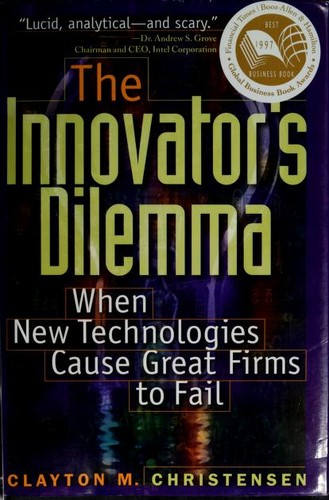
The Innovator's Dilemma
Clayton M. Christensen, L J Ganser
Explains why great companies fail at disruptive innovation, essential for strategic foresight.
-
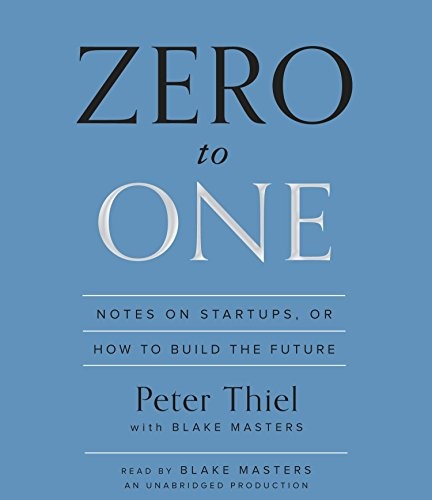
Zero to One
Peter A. Thiel, Blake Masters
Challenges founders to create breakthroughs instead of copying, with bold long-term thinking.
-
The Hard Thing About Hard Things
Ben Horowitz
Raw lessons on leading through crises and scaling startups successfully.
-
Superintelligence
Nick Bostrom
Deep analysis of AI risks and paths that informs ethical tech leadership decisions.
-
Abundance
Peter H. Diamandis, Steven Kotler
Shows how exponential tech creates opportunity, inspiring bold entrepreneurial visions.
-

Thinking in systems
Donella H. Meadows, Diana Wright
Teaches systemic thinking to anticipate complex outcomes in business and innovation.
Founder activity
Nobody has shelved this yet
Be the first founder to add it.