
Book summary
Weapons of Math Destruction by Cathy O'Neil exposes how opaque mathematical models and algorithms increasingly govern critical aspects of modern life from hiring and lending to education policing and sentencing. Far from delivering objective fairness these "weapons of math destruction" amplify existing biases reinforce inequality and create destructive feedback loops that punish the poor and marginalized while benefiting the privileged. O'Neil argues that because the models are unregulated uncontestable and often wrong they form a toxic threat to democracy and social mobility. The book calls for greater responsibility from modelers regulation by policymakers and heightened public awareness to demand transparency and accountability.
Key founder lessons
-
1
Algorithms create feedback loops
Founders must audit models for self-reinforcing cycles that punish the disadvantaged, like zip-code proxies denying loans and education.
-
2
Opacity destroys accountability
Build explainable systems so users and teams can challenge scores; black-box models in hiring or credit amplify hidden biases.
-
3
Proxies replace real goals
Define success with genuine metrics, not flawed substitutes like test scores for teacher quality, to avoid gaming and injustice.
-
4
Scale worsens discrimination
Test models at massive scale early; a small biased algorithm deployed widely, like resume sorters, entrenches societal harm.
-
5
Models need regulation
Advocate for transparency standards and internal ethics reviews before deploying WMDs in products affecting customers or employees.
Grok's review
Important wake-up call, but padded and preachy.
O'Neil delivers a compelling moral panic about how opaque algorithms entrench inequality—from credit scoring to teacher evaluations and recidivism models—with vivid real-world examples that hit home for anyone building data products. The book shines when it shows how proxies and feedback loops turn neutral math into self-reinforcing bias machines, a lesson every founder scaling an ML feature should internalize. Unfortunately it gets repetitive, leans heavily on anecdote over rigorous evidence, and feels dated in 2024 given how much the regulatory and technical landscape has shifted since 2016; the solutions section is thin on actionable advice for builders. Worth reading once for the ethical gut-check, but don't expect a playbook or fresh insights.
Best for: Founders deploying data models at scale
Similar books
-

The Alignment Problem
Brian Christian
Explores how to align AI with human values, offering critical lessons for ethical tech leadership and responsible scaling.
-

Prediction machines
Ajay Agrawal
Breaks down AI as a tool for cheap prediction, with sharp insights for startup strategy and decision-making under uncertainty.
-

Superforecasting
Philip E. Tetlock, Dan Gardner
Reveals how to improve forecasting accuracy, a vital skill for founders navigating markets and building resilient companies.
-
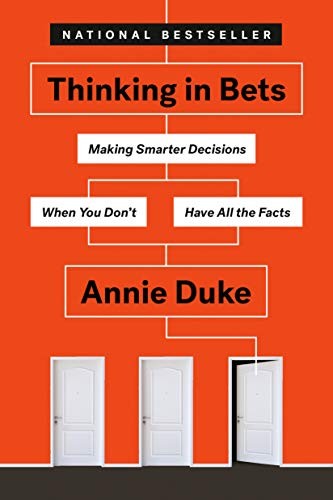
Thinking in Bets
Annie Duke
Frames decisions as bets, helping founders embrace uncertainty and upgrade their risk and outcome evaluation.
-
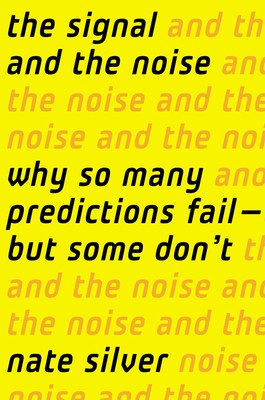
The Signal and the Noise
Nate Silver
Shows how to separate useful signals from noise in data, directly applicable to product, market, and strategy choices.
Founder activity
Nobody has shelved this yet
Be the first founder to add it.