
Book summary
Superforecasting by Philip E. Tetlock and Dan Gardner explores why most experts are poor at predicting the future yet a small group of ordinary people called superforecasters consistently outperform them. Drawing on the massive Good Judgment Project tournament the authors show that these top performers succeed not through genius or secret methods but by adopting specific habits such as gathering diverse evidence thinking in probabilities updating beliefs incrementally working in teams and keeping rigorous score of their accuracy. The book argues that these techniques can be learned by anyone and offers practical guidance for improving foresight in business policy and everyday decisions while contrasting notable forecasting successes and failures throughout history. Ultimately it demonstrates that better prediction is a skill rooted in humility openness and disciplined reasoning rather than innate talent or elite access to information.
Key founder lessons
-
1
Think probabilistically
Superforecasters update beliefs incrementally with new evidence using Bayes-like thinking rather than binary yes/no calls.
-
2
Update beliefs often
Founders should frequently revise probability estimates as fresh data arrives, avoiding anchoring on initial hunches.
-
3
Break problems into parts
Decompose complex startup predictions into smaller, more tractable questions to improve accuracy like the superforecasters.
-
4
Seek diverse evidence
Aggressively gather information from outside your bubble and actively seek disconfirming data to counter confirmation bias.
-
5
Keep score and iterate
Track forecast accuracy rigorously and review mistakes openly to refine your predictive process over time.
Grok's review
Essential mental models, but padded with anecdotes.
Superforecasting is one of the most practical books on probabilistic thinking and updating beliefs you'll find—its core lessons on base rates, decomposition, and keeping score have sharpened countless founders' decision-making under uncertainty. The real-world tournament data and stories of ordinary people outperforming experts make the techniques feel actionable rather than academic. That said, it's noticeably padded with repetitive examples and historical detours that could have been cut by a third without losing value, and some of the optimism about teachability feels a bit dated in light of how few organizations actually sustain the discipline. Still, the evidence isn't thin; it's drawn from a massive, credible project. For startup leaders juggling product bets, hiring, and market timing, the upside is huge if you actively apply even half the toolkit.
Best for: Founders making high-stakes decisions under uncertainty
Similar books
-

Thinking, fast and slow
Daniel Kahneman
Reveals cognitive biases and decision-making systems essential for better forecasting and leadership.
-

Range
David J. Epstein
Shows why generalists with broad thinking outperform specialists, aiding adaptive startup strategies.
-
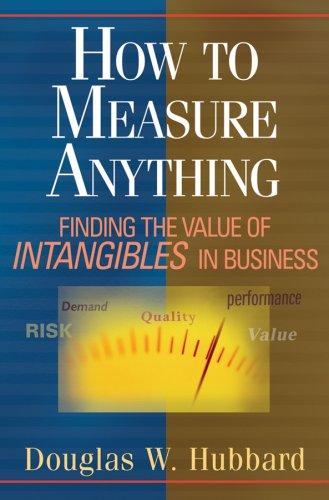
How to Measure Anything
Douglas W. Hubbard
Practical methods to quantify uncertainty and make data-driven choices under ambiguity.
-

Noise
Daniel Kahneman, Olivier Sibony
Explores variability in judgments and offers ways to reduce errors in team decisions.
-
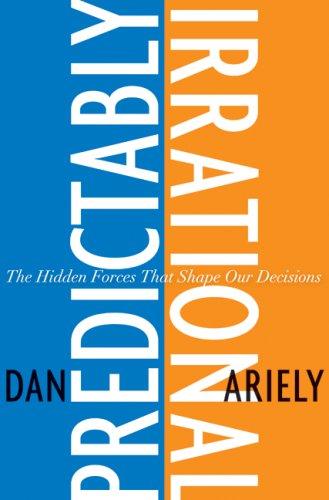
Predictably Irrational
Dan Ariely
Uncovers hidden forces shaping choices, helping founders design better products and strategies.
Founder activity
Nobody has shelved this yet
Be the first founder to add it.