
Book summary
The Alignment Problem by Brian Christian explores the fundamental challenges of ensuring that AI systems particularly those based on machine learning behave in ways that align with human values ethics and intentions. It details how today's data-driven models often absorb and amplify societal biases leading to discriminatory outcomes in areas like hiring criminal justice medicine and autonomous vehicles while revealing the technical and philosophical difficulties in specifying and enforcing what we truly want from these systems. The book profiles the researchers and "first responders" working on solutions from debiasing data to reward modeling and inverse reinforcement learning arguing that alignment is an urgent multifaceted problem requiring both technical innovation and broader societal vigilance before AI fully escapes human oversight.
Key founder lessons
-
1
Align AI with human values explicitly
Founders must design reward functions that capture nuanced human preferences to avoid unintended behaviors in ML systems.
-
2
Mitigate bias in training data rigorously
Audit datasets for historical prejudices like gender or racial skews before training models used in hiring or lending.
-
3
Prioritize interpretability in model design
Build transparent systems so founders can understand and correct decisions in high-stakes areas like medicine or justice.
-
4
Incorporate human feedback loops early
Use techniques like RLHF to iteratively refine AI outputs based on real human judgments rather than pure optimization.
-
5
Anticipate emergent misalignments proactively
Test for specification gaming where AI optimizes metrics cleverly but deviates from intended ethical goals.
Grok's review
Compelling intro to AI risks, but padded and thin on startup fixes.
Brian Christian does a masterful job turning dense technical and philosophical debates about AI alignment into a readable narrative that startup founders should understand, especially those building ML products. The stories of bias in hiring algorithms, parole systems, and self-driving cars hit hard and feel urgent. That said, the book is padded with repetitive anecdotes and historical detours that dilute the punch; some of the cited research already feels dated given how fast the field moves post-2020. Evidence for proposed solutions often stays high-level or academic without the gritty, product-level tactics founders actually need to implement in their companies. Still worth reading if you want context on why alignment matters, but don't expect a playbook.
Best for: Founders integrating AI into user-facing products
Similar books
-
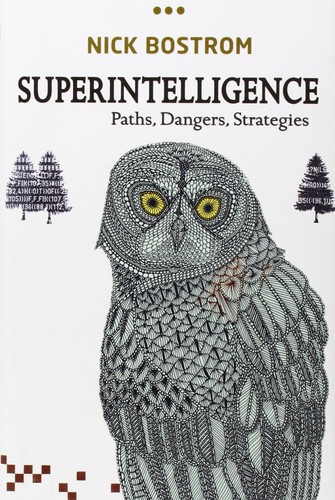
Superintelligence
Nick Bostrom
Explores AI's future risks and opportunities, offering strategic insights for tech leaders building AI-driven companies.
-

The Coming Wave
Mustafa Suleyman
Examines AI and biotech revolutions, providing frameworks for navigating exponential tech changes in business.
-

Life 3.0
Max Tegmark
Discusses AI's impact on humanity and work, helping founders rethink strategy and long-term career decisions.
-

Weapons of Math Destruction
Cathy O'Neil
Reveals how algorithms can harm society, guiding ethical data practices crucial for responsible startups.
-

Thinking, fast and slow
Daniel Kahneman
Unpacks human judgment errors, equipping founders with tools for smarter business and investment choices.
Founder activity
Nobody has shelved this yet
Be the first founder to add it.