
Book summary
The Coming Wave by Mustafa Suleyman explores the imminent flood of transformative technologies centered on advanced AI and synthetic biology that will soon permeate every aspect of society, from personal life and business to governance and warfare. Drawing on his experience as DeepMind cofounder, Suleyman argues that these rapidly proliferating tools will generate unprecedented prosperity and capability while simultaneously eroding the power of nation-states and destabilizing global order. The core argument is that humanity faces an existential choice between catastrophic misuse on one hand and authoritarian surveillance on the other, requiring urgent collective action to steer a narrow path toward beneficial outcomes without descending into dystopia or collapse.
Key founder lessons
-
1
AI and biotech will proliferate uncontrollably
Founders must anticipate rapid, cheap replication of powerful tech, building containment strategies into products from day one as warned in the book.
-
2
Nation-states face existential disruption
Startup leaders should prepare business models for weakened governments and shifting global power, focusing on self-regulating systems.
-
3
Balance innovation with containment
Founders need to embed safety and ethical guardrails early to avoid catastrophe while pursuing breakthroughs, per Suleyman's core dilemma.
-
4
Surveillance risks from overreaction
Entrepreneurs must design privacy-preserving tech to prevent authoritarian responses that could stifle innovation and liberty.
-
5
Abundance demands new governance
Founders should innovate solutions for managing prosperity from AI and synthetic biology, rethinking incentives beyond current institutions.
Grok's review
Important thesis, but padded and uneven.
Suleyman nails the core insight that AI and synthetic biology are converging into a wave that will upend everything faster than society can adapt, and his DeepMind pedigree gives the warnings real weight. The sections on containment failures and the inherent uncontrollability of general-purpose tech are genuinely sobering for any founder scaling an AI product. Unfortunately the book is bloated with repetitive futurism, thin historical analogies that don't hold up, and evidence that often feels cherry-picked or anecdotal rather than rigorous. It also already feels dated in 2024 as the pace of model releases and real-world deployment has outrun some of the scenarios. Still worth reading if you want a founder-level wake-up call on why alignment, regulation, and defense-in-depth matter, but don't treat it as gospel.
Best for: AI-native founders wrestling with long-term risk
Similar books
-

The Alignment Problem
Brian Christian
Explores AI ethics and control, offering critical insights for responsibly scaling AI-driven companies.
-
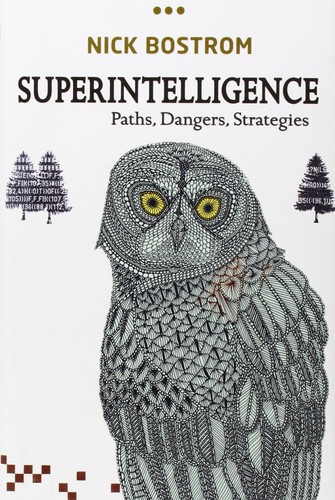
Superintelligence
Nick Bostrom
Examines AI's future risks and opportunities, guiding strategic decisions for tech founders.
-
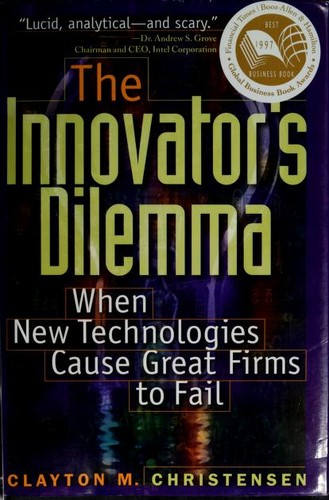
The Innovator's Dilemma
Clayton M. Christensen, L J Ganser
Reveals why great companies fail against disruption, essential for navigating emerging tech waves.
-
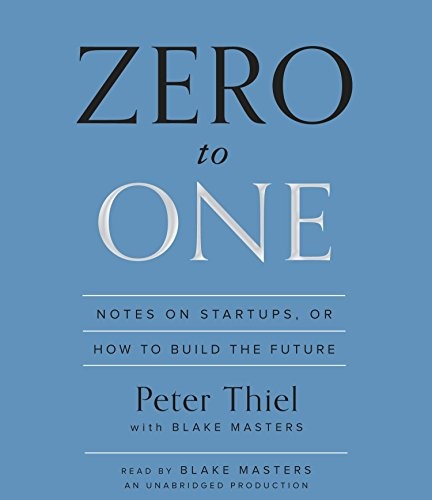
Zero to One
Peter A. Thiel, Blake Masters
Challenges conventional thinking on innovation and monopoly-building in uncertain tech landscapes.
-
The Hard Thing About Hard Things
Ben Horowitz
Delivers raw lessons on leadership and crisis management from a veteran builder.
-
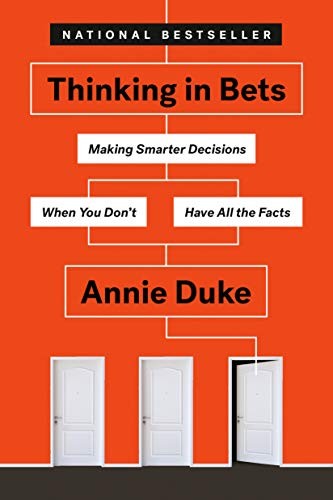
Thinking in Bets
Annie Duke
Teaches probabilistic decision-making under uncertainty, vital for high-stakes startup choices.
Founder activity
Nobody has shelved this yet
Be the first founder to add it.