
Book summary
Life 3.0 by Max Tegmark explores how the advent of artificial general intelligence could reshape humanity's future in profound ways, categorizing life's evolutionary stages from biological (Life 1.0) to cultural (Life 2.0) to technological (Life 3.0) where beings can design their own hardware and software. Tegmark examines the potential impacts on jobs, warfare, ethics, society, and human purpose, while addressing key challenges like aligning superintelligent AI with human values, preventing catastrophic scenarios such as uncontrolled AI or arms races in autonomous weapons, and ensuring AI enhances rather than diminishes human flourishing. The core argument is that the trajectory of AI is not predetermined but will be determined by the choices we make today, urging readers to actively participate in shaping a beneficial future through informed dialogue on consciousness, meaning, and cosmic limits. The book balances optimism with caution, presenting diverse viewpoints without prescribing a single path forward.
Key founder lessons
-
1
Anticipate AI-driven job displacement
Founders should proactively automate routine tasks in their startups while creating new roles focused on human-AI collaboration to avoid obsolescence.
-
2
Design robust AI systems
Build AI products with safeguards against malfunction, hacking, or unintended behaviors as emphasized in discussions on AI safety and control.
-
3
Avoid AI arms races
Founders in defense or autonomous tech must advocate for international cooperation to prevent dangerous escalations in lethal autonomous weapons development.
-
4
Prepare for superintelligence scenarios
Evaluate long-term business models assuming AI could surpass humans, shifting focus to value creation in areas machines cannot replicate.
-
5
Shape beneficial AI futures
Actively participate in ethical AI conversations to influence outcomes that enhance human prosperity, purpose, and cosmic life expansion.
Grok's review
Thought-provoking but padded and already dated.
Life 3.0 delivers a sweeping, accessible tour of AI's possible futures, from job displacement and lethal autonomous weapons to superintelligence and cosmic-scale consciousness. Tegmark's strength is framing the big questions in founder-friendly terms—how to align powerful systems, design robust governance, and preserve human purpose amid automation—which makes it a solid prompt for strategic thinking. However, the book suffers from noticeable padding (repetitive scenarios, long fictional vignettes), thin evidence for some bolder claims, and ideas that already feel dated given the rapid progress in LLMs and scaling since 2017. It's not the deepest technical treatment nor the most rigorous, but it remains a worthwhile conversation starter for anyone building in the space.
Best for: Founders grappling with AI's long-term societal impact.
Similar books
-
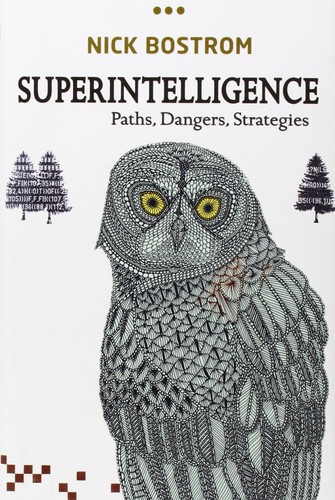
Superintelligence
Nick Bostrom
Explores AI's future impacts, offering strategic foresight crucial for tech founders navigating emerging risks.
-

The Alignment Problem
Brian Christian
Examines aligning AI with human values, delivering practical lessons on ethics and decision-making for builders.
-

The Coming Wave
Mustafa Suleyman
Analyzes AI and biotech waves, providing startup strategy insights on containment and opportunity.
-

Thinking, fast and slow
Daniel Kahneman
Reveals cognitive biases, sharpening founder judgment in high-stakes decisions and team leadership.
-
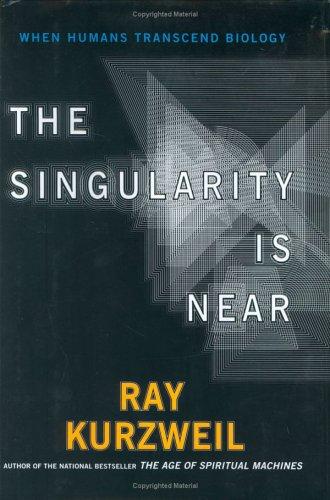
The Singularity Is Near
Ray Kurzweil
Forecasts exponential tech growth, inspiring visionary planning and innovation strategies for companies.
-
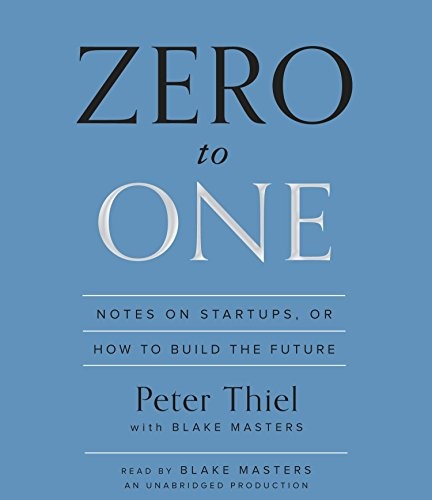
Zero to One
Peter A. Thiel, Blake Masters
Challenges founders to create breakthroughs, blending tech philosophy with practical startup building advice.
Founder activity
Nobody has shelved this yet
Be the first founder to add it.