
Book summary
Prediction Machines by Ajay Agrawal, Joshua Gans, and Avi Goldfarb argues that the core value of artificial intelligence is to dramatically reduce the cost of prediction, allowing organizations to make more accurate forecasts about uncertain future events. The book separates decision-making into prediction, which machines can increasingly handle at low cost, and judgment, which remains a distinctly human strength involving values, trade-offs, and consequences. By reframing AI in economic terms, the authors show how managers can redesign workflows, rethink business models, and optimize the human-machine interface to create competitive advantage without being overwhelmed by hype. Ultimately it offers a practical toolkit for navigating AI-driven disruption by focusing on where cheaper predictions create the greatest value.
Key founder lessons
-
1
AI lowers prediction cost
Founders should treat AI as a tool that reduces the expense of forecasting outcomes, enabling more frequent and accurate predictions in operations.
-
2
Separate prediction from judgment
Break decisions into prediction (AI's domain) and judgment (human's domain) to optimize human-AI collaboration and avoid over-relying on machines.
-
3
Scale predictions with cheaper costs
With lower prediction costs, founders can apply AI to make vastly more predictions across business processes like pricing, hiring, and inventory.
-
4
Redesign workflows around AI
Reengineer business processes to leverage abundant cheap predictions, such as shifting from rule-based to probabilistic decision systems.
-
5
Focus on human judgment value
Elevate human roles in providing judgment where uncertainty or values matter, turning AI into a complement rather than a job replacement.
Grok's review
Solid economics lens on AI, but padded and dated.
Prediction Machines is at its best when it reframes AI as a drop in the cost of prediction, letting founders apply basic microeconomics to decisions under uncertainty. That core insight is genuinely useful and cuts through the usual hype. However, the book is heavily padded with repetitive examples, belabored metaphors, and filler chapters that feel like they were stretched to reach book length. Some of its concrete predictions about self-driving cars and organizational change already feel dated only a few years later, and the evidence is often thin anecdotes rather than rigorous data. Still, the separation of prediction from judgment is a valuable mental model that many founders and operators should internalize; just be ready to skim.
Best for: Founders applying economics to AI strategy
Similar books
-

The Second Machine Age
Erik Brynjolfsson, Andrew McAfee
Explores how AI and digital tech reshape work, strategy, and competitive advantage for founders.
-
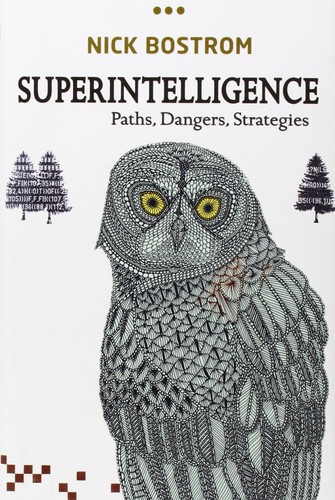
Superintelligence
Nick Bostrom
Examines AI's long-term impact on business, society, and the strategic decisions leaders must make.
-

Prediction
Bruce Bueno de Mesquita
Teaches data-driven forecasting and strategic decision-making essential for startup leaders.
-
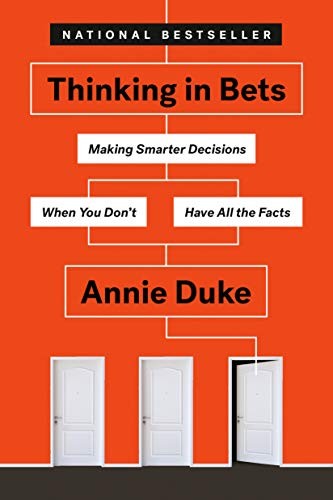
Thinking in Bets
Annie Duke
Improves decision-making under uncertainty, directly applicable to founder risk and strategy.
Founder activity
Nobody has shelved this yet
Be the first founder to add it.