
Book summary
Prediction by Bruce Bueno de Mesquita explains how mathematical models grounded in game theory can forecast political and economic events with surprising accuracy by focusing on the self-interested incentives and relative influence of key decision-makers rather than on conventional analysis or expert intuition. The book demonstrates the method through real-world applications including regime change, international negotiations, and business strategy, showing how to map out stakeholders' goals, power, and flexibility to simulate likely outcomes. Its core argument is that rigorous, quantifiable logic outperforms traditional forecasting because it systematically accounts for strategic interaction and reveals counterintuitive results that human judgment often misses.
Key founder lessons
-
1
Model with selectorate theory
Use the book's selectorate framework to predict which stakeholders truly influence startup outcomes like funding rounds or pivots.
-
2
Quantify win-sets precisely
Calculate the range of acceptable deals with investors or partners using the author's expected-utility math to avoid bad agreements.
-
3
Focus on pivotal players
Identify and prioritize the few key individuals whose preferences shift group decisions, as shown in the book's coalition analysis.
-
4
Incorporate credibility and resolve
Factor each party's willingness to walk away into forecasts for negotiations, directly from the book's game-theoretic models.
-
5
Update predictions iteratively
Revise your forecasts as new information emerges, mirroring the dynamic modeling approach in the book for adaptive strategy.
Grok's review
Game theory for politics, not product-market fit.
Bueno de Mesquita's model of forecasting via expected utility and coalition analysis is clever and occasionally insightful, especially when he tears apart conventional wisdom on foreign policy. For founders it can spark useful thinking about stakeholder incentives and power mapping inside companies or markets. But the book is padded with repetitive explanations of the same math, leans heavily on political case studies that feel dated post-2010, and offers surprisingly thin empirical validation for its predictive claims. The core technique is powerful in theory yet cumbersome to apply without a team of analysts, making it more intellectual curiosity than practical toolkit.
Best for: Founders obsessed with strategic foresight and political risk.
Similar books
-

Superforecasting
Philip E. Tetlock, Dan Gardner
Master the art of accurate predictions to make better strategic decisions in business.
-

Thinking, fast and slow
Daniel Kahneman
Reveals cognitive biases that distort judgment, essential for smarter founder choices.
-

High Output Management
Andrew S. Grove
Timeless lessons on managing people and operations for scalable company growth.
-
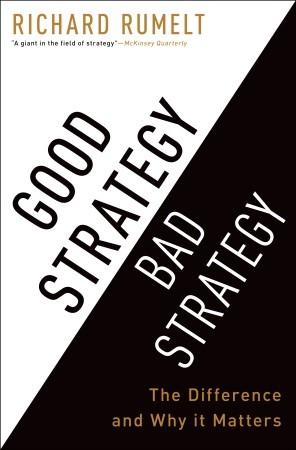
Good Strategy, Bad Strategy
Richard P. Rumelt
Teaches how to craft clear, effective strategies using rigorous analysis and foresight.
-
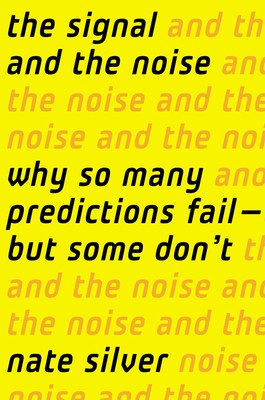
The Signal and the Noise
Nate Silver
Explains probabilistic thinking and separating real signals from noise for better predictions.
Founder activity
Nobody has shelved this yet
Be the first founder to add it.