
Book summary
On War by Carl von Clausewitz is a foundational treatise on the nature, theory, and practice of warfare, distilled from the author's experiences in the Napoleonic Wars and extensive study of military history. It explores war as a continuation of politics by other means, emphasizing its inherent uncertainty, friction, and the critical role of chance, genius, and the interplay between moral and material forces. The core argument is that war is a profoundly human and political phenomenon that cannot be reduced to rigid scientific principles or formulas; instead, commanders must navigate its fog and chaos through judgment, courage, and an understanding of its true essence as an instrument of policy.
Key founder lessons
-
1
War is politics by other means
Founders must view competition as an extension of business strategy, aligning every product move with overarching company objectives.
-
2
Fog and friction of war
Anticipate uncertainty and execution breakdowns; successful founders build resilient teams and processes to adapt in real-time.
-
3
Center of gravity
Identify and relentlessly attack the competitor's or market's single vital point that, if neutralized, collapses their position.
-
4
Culminating point of attack
Know when momentum peaks and avoid overextension; time market entries, funding rounds, and expansions to preserve strength.
-
5
Moral forces over material
Cultivate will, courage, and esprit de corps in your team, as these intangible factors often decide outcomes against superior resources.
Grok's review
Classic but bloated and often irrelevant for founders.
On War is a dense, philosophical treatise that popularized ideas like 'fog of war,' friction, and the primacy of politics in conflict—concepts that founders love to quote when romanticizing their chaotic startups. The core insights on strategy, uncertainty, and the interplay of will, chance, and reason can sharpen thinking about competition and decision-making under pressure. That said, it's painfully padded with repetitive 19th-century campaign analysis, dated assumptions about mass armies and monarchy, and assertions backed by anecdote rather than rigorous evidence; most of it feels like required military reading rather than a practical manual. For startup founders, it's worth skimming the famous bits (Book 1 especially) but not grinding through the whole thing—better modern distillations exist.
Best for: Strategy nerds seeking historical depth
Similar books
-
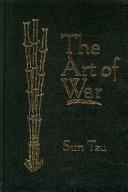
The Art of War
孙武 (Sun Tzu)
Timeless military strategy with direct applications to competitive business and leadership decisions.
-
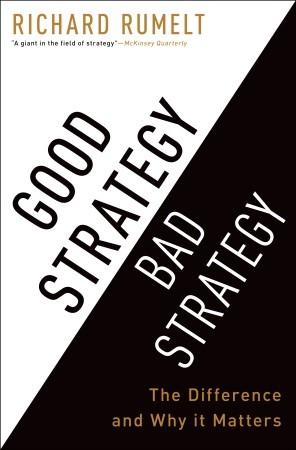
Good Strategy, Bad Strategy
Richard P. Rumelt
Distills strategic thinking into practical frameworks for founders facing uncertainty and competition.
-

The 48 Laws of Power
Robert Greene
Reveals power dynamics and tactics that help navigate corporate politics and competitive markets.
-

Meditations
Marcus Aurelius Aurelius
Stoic principles for resilient leadership, decision-making under pressure, and mental discipline.
-

On grand strategy
John Lewis Gaddis
Explores balancing ends and means, offering lessons for long-term company vision and adaptability.
-

Team of Rivals
Doris Kearns Goodwin
Lincoln's leadership in crisis teaches coalition-building, empathy, and decisive action for founders.
Founder activity
Nobody has shelved this yet
Be the first founder to add it.