
Book summary
On Grand Strategy by John Lewis Gaddis distills two decades of his Yale seminar on the subject into a sweeping historical survey of how leaders from the ancient Greeks through World War II have aligned ends with means under conditions of uncertainty. Drawing on thinkers and statesmen such as Thucydides, Sun Tzu, Augustine, Machiavelli, Elizabeth I, Lincoln, Wilson, and Franklin D. Roosevelt, the book contrasts the hedgehog-like impulse to impose a single big idea on the world with the fox-like ability to improvise across multiple realities. Gaddis argues that the most successful grand strategies arise from this fox-like adaptability, respecting the limits of power, the importance of timing, and the moral ambiguities of statecraft. The core lesson is that effective leadership requires balancing vision with pragmatism, learning from history’s patterns without being enslaved by them.
Key founder lessons
-
1
Balance ends against means
Founders must align ambitious visions with realistic resources, as Gaddis shows through historical overreaches like those of Philip II.
-
2
Embrace strategic patience
Like Elizabeth I's calculated delays, startup leaders should wait for optimal conditions rather than rushing into every opportunity.
-
3
Navigate fox-hedgehog tension
Isaiah Berlin's distinction, highlighted by Gaddis, teaches founders to combine big-picture vision with agile adaptability.
-
4
Learn from history's ironies
Tolstoy's view in War and Peace, per Gaddis, warns founders that overplanning ignores the unpredictable chaos of markets.
-
5
Prioritize moral realism
Drawing from Augustine and the American Founders, Gaddis urges leaders to temper ideals with pragmatic ethics in decision-making.
Grok's review
Brilliant history, padded lectures for founders.
Gaddis distills decades of Yale's grand-strategy seminar into elegant case studies—from Thucydides and Augustine to Lincoln and FDR—showing how great leaders balance ends, means, and moral limits. The core insight (that strategy is about knowing when to be a fox and when to be a hedgehog) is sharp and useful for any founder navigating uncertainty. But the book is padded with long digressions, thin on rigorous evidence, and feels dated in its heavy reliance on 20th-century statecraft that maps unevenly to fast-moving startups. It's a master class in thinking long-term, yet the leisurely academic pace tests a busy entrepreneur's patience.
Best for: Founders who love deep history and want to think like statesmen.
Similar books
-

The Prince
Niccolò Machiavelli
Masterclass in pragmatic power dynamics and strategic adaptability for leaders.
-
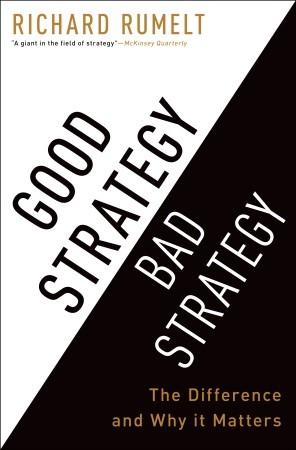
Good Strategy, Bad Strategy
Richard P. Rumelt
Distills clear frameworks to craft effective strategies versus vague plans.
-
The Hard Thing About Hard Things
Ben Horowitz
Raw lessons on navigating crises and leadership decisions in startups.
-

Thinking, fast and slow
Daniel Kahneman
Reveals cognitive biases to improve strategic decision-making under uncertainty.
-

Team of Rivals
Doris Kearns Goodwin
Lincoln's leadership in uniting rivals offers timeless team-building insights.
-

High Output Management
Andrew S. Grove
Practical systems for scaling operations, decisions, and management excellence.
Founder activity
Nobody has shelved this yet
Be the first founder to add it.