Book summary
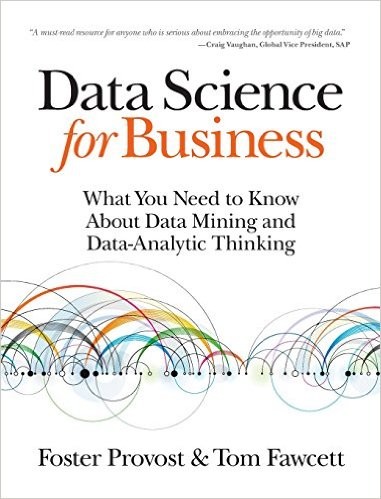
Data Science for Business by Foster Provost and Tom Fawcett introduces the fundamental principles of data science and the data-analytic thinking required to extract useful knowledge and business value from data. The book explains core concepts such as predictive modeling, data mining, evaluation techniques, and the extraction of patterns from large datasets while emphasizing how to frame business problems in ways that data science can solve. It focuses on practical decision-making, avoiding heavy mathematics, and illustrates how organizations can use data-driven insights to improve performance, target customers, and manage risk. The core argument is that mastering analytic thinking and understanding the principles behind data science techniques is more valuable for business professionals than knowing specific algorithms or tools.
Key founder lessons
-
1
Data-Analytic Thinking First
Founders must frame business problems as data questions to identify what data to collect and how to extract value.
-
2
Targeted Data Collection
Prioritize collecting only data that directly informs key business decisions rather than amassing everything possible.
-
3
Model Evaluation Metrics
Choose evaluation metrics aligned with true business goals like expected profit, not just accuracy or AUC.
-
4
Avoid Data Traps
Recognize and mitigate common pitfalls like overfitting or spurious correlations that mislead business actions.
-
5
Human Judgment + Models
Combine predictive models with domain expertise to make better decisions than either alone could achieve.
Grok's review
Solid data-thinking intro, but padded and dated.
This book does an excellent job teaching the mental models behind data science—lift, churn, A/B testing, overfitting, and the difference between correlation and causation—without drowning founders in code or math. The core framework for thinking analytically about business problems is genuinely useful and has aged better than most technical books from 2013. However, it suffers from repetition and padding to stretch concepts into a full book, some examples feel thin on real-world evidence, and the tooling discussions are now ancient (no modern ML ops, cloud, or LLMs). It's still the clearest non-technical treatment of data-analytic thinking I've seen, but expect to skim later chapters.
Best for: Non-technical founders who need to manage data teams
Similar books
-

Prediction machines
Ajay Agrawal
Explains AI economics and decision-making like data science but focused on business strategy.
-
The Lean Startup
Eric Ries
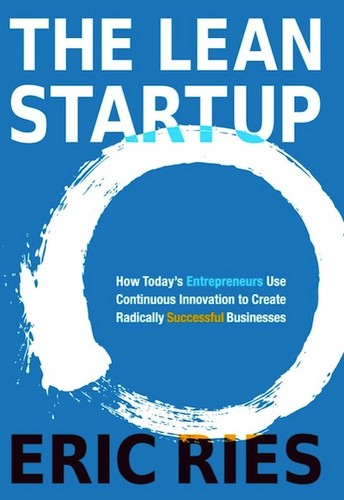
Teaches data-driven experimentation and iteration essential for building scalable companies.
-

Competing on Analytics
Thomas H. Davenport, Jeanne Harris
Shows how analytics creates competitive advantage with real business cases.
-

Thinking, fast and slow
Daniel Kahneman
Reveals cognitive biases to improve data interpretation and managerial decisions.
-

Superforecasting
Philip E. Tetlock, Dan Gardner
Demonstrates how to make accurate predictions using data and probabilistic thinking.
-

Naked Statistics
Charles J. Wheelan
Makes statistics intuitive and applicable for non-technical founders driving data decisions.
Founder activity
Nobody has shelved this yet
Be the first founder to add it.