
Book summary
Collapse by Jared Diamond examines why some past societies disintegrated while others survived similar challenges, drawing on case studies ranging from Easter Island and the Anasazi to the Maya, the Greenland Norse, and modern societies in Rwanda, Haiti, and Australia. Diamond identifies a core pattern of environmental damage, climate change, rapid population growth, hostile neighbors, and loss of trade partners as the main drivers of collapse, arguing that societies often fail because they ignore warning signs or make poor choices about resource use. The book contends that these historical lessons apply directly to today's globalized world, where the same factors threaten modern civilization, and emphasizes that proactive environmental stewardship and thoughtful decision-making can prevent our own collapse. Ultimately, Diamond delivers an urgent call for sustainability by showing that societal fates are not inevitable but result from human responses to ecological pressures.
Key founder lessons
-
1
Recognize early warning signs of decline
Founders must monitor resource depletion and environmental feedback like Easter Islanders ignored tree loss before total collapse.
-
2
Avoid over-reliance on fragile external support
Like the Greenland Vikings dependent on unstable Norway trade, startups should diversify beyond key partners or markets to survive shocks.
-
3
Prevent population growth from outstripping resources
Maya societies grew too fast for their agriculture; founders scale teams and burn rate only as sustainable revenue allows.
-
4
Adapt to changing climate and conditions
Anasazi failed to adjust to drought; leaders must pivot business models when market or tech environments shift unexpectedly.
-
5
Choose societal values that ensure long-term survival
Diamond shows how cultural commitments doomed some groups while others thrived; founders embed principles that prioritize sustainability over short-term gains.
Grok's review
Brilliant big-picture warnings, bloated execution.
Collapse is a sweeping, sobering tour of how societies—from Easter Island to the Maya to the Greenland Norse—destroyed themselves through environmental shortsightedness, overpopulation, and bad decision-making. Diamond's core thesis that we ignore ecological signals at our peril lands hard for founders who treat runway like infinite resources. What doesn't work is the relentless padding (the book could lose 200 pages), the dated 2005 climate data, and evidence that sometimes feels cherry-picked or overly deterministic. Still, the pattern-matching across civilizations is uncomfortably relevant to today's resource-constrained startups and planet-scale problems.
Best for: Founders obsessed with long-term survival and second-order effects.
Similar books
-

Guns, Germs, and Steel
Jared Diamond
Explores societal success factors through geography and environment, offering frameworks for strategic thinking in business.
-

Why Nations Fail
Daron Acemoglu, James A. Robinson
Examines how institutions drive prosperity or poverty, with direct lessons on building sustainable company cultures and systems.
-

The Upside of Stress: Why Stress is Good for You (and How to Get Good at it)
Kelly McGonigal
Reframing challenges as growth opportunities builds founder resilience and decision-making under pressure.
-

Antifragile
Nassim Nicholas Taleb, Genís Sánchez Barberán
Teaches how to thrive in volatility and uncertainty, essential for startup survival and innovation.
-
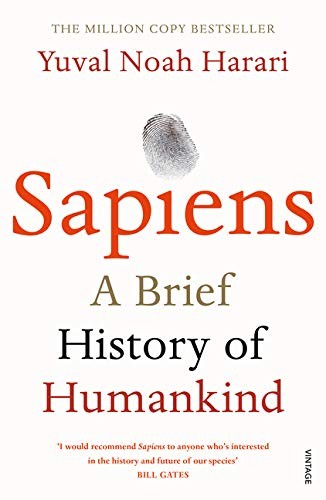
Sapiens
Yuval Noah Harari
Reveals how myths and cooperation scaled humanity, informing leadership, culture, and organizational growth strategies.
-
The Hard Thing About Hard Things
Ben Horowitz
Raw lessons on navigating crises and tough decisions every founder faces when scaling a company.
Founder activity
Nobody has shelved this yet
Be the first founder to add it.