
blue ocean strategy
Book summary
Blue Ocean Strategy by W. Chan Kim and Renée Mauborgne argues that companies should stop competing in overcrowded "red oceans" where rivals fight for market share through incremental improvements and instead create uncontested "blue oceans" of new market space. The core framework shows how to reconstruct market boundaries, focus on the big picture, reach beyond existing demand, and get the strategic sequence right to simultaneously pursue differentiation and low cost. Through dozens of real-world examples ranging from Cirque du Soleil to the Nintendo Wii, the book demonstrates that lasting success comes from value innovation that makes competition irrelevant rather than from head-to-head rivalry.
Key founder lessons
-
1
Create uncontested market space
Founders reconstruct market boundaries to make competition irrelevant, as in the book's value innovation framework.
-
2
Focus on value innovation
Simultaneously pursue differentiation and low cost to open new demand, per the strategy canvas tool.
-
3
Apply the four actions framework
Eliminate, reduce, raise, and create factors to break the value-cost trade-off and build a blue ocean.
-
4
Reach beyond existing demand
Target noncustomers and unlock new segments instead of fighting over current customers in red oceans.
-
5
Get the strategic sequence right
Align buyer utility, price, cost, and adoption to ensure commercial viability of the blue ocean idea.
Grok's review
Still useful framework, now padded and dated.
Blue Ocean Strategy popularized the idea of creating uncontested market space instead of fighting bloody red oceans of competition, and its value curve and ERRC grid remain genuinely helpful mental models for founders seeking differentiation. The core insight that most industries become commoditized and that breakthrough value often comes from eliminating/reducing/raising/creating factors is timeless and has influenced countless startup pivots. However, the book is heavily padded with repetitive case studies, many of which feel cherry-picked or retrospective; the evidence is mostly anecdotal rather than rigorous, and some celebrated 'blue oceans' (like the Cirque du Soleil example) have been critiqued as less novel than presented. In today's hyper-competitive, fast-moving startup world, its 2005-era examples and relative silence on execution, defensibility against fast followers, or platform/network effects make it feel dated. Worth reading once for the framework, but don't treat it as gospel.
Best for: Founders seeking strategic differentiation
Similar books
-
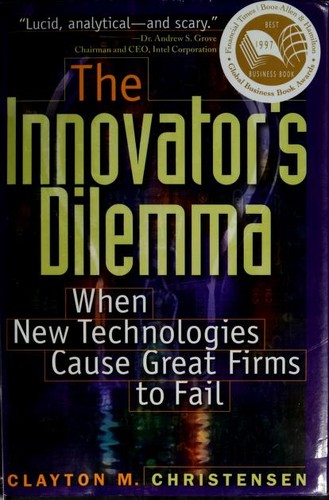
The Innovator's Dilemma
Clayton M. Christensen, L J Ganser
Explains why great companies fail by sticking to sustaining innovations instead of disruptive ones.
-

Crossing the Chasm
Geoffrey A. Moore
Masterclass on marketing and selling disruptive tech products to mainstream customers.
-
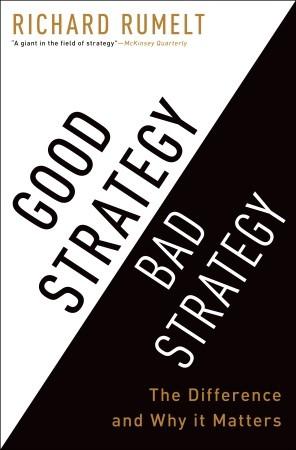
Good Strategy, Bad Strategy
Richard P. Rumelt
Teaches how to craft clear, coherent strategies that create real competitive advantage.
-
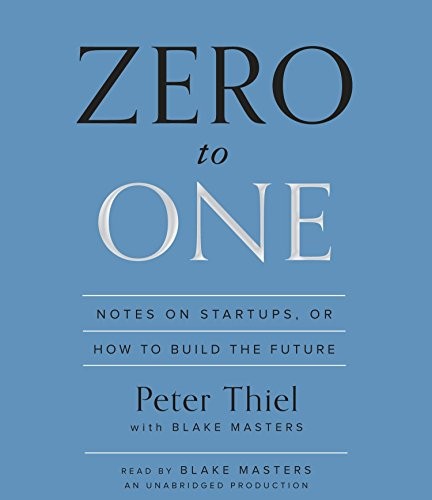
Zero to One
Peter A. Thiel, Blake Masters
Challenges founders to build unique monopolies rather than compete in crowded markets.
-
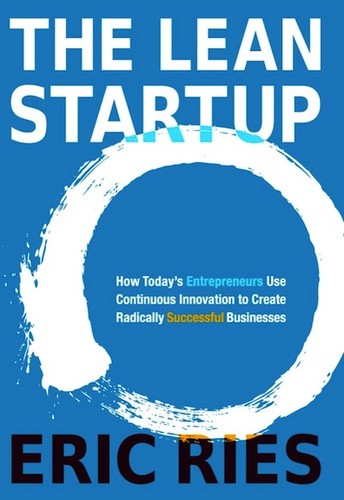
The Lean Startup
Eric Ries
Shows how to test ideas quickly, iterate, and build businesses with minimal waste.
-

Blue Ocean Shift
W. Chan Kim and Renee Mauborgne
Practical guide with tools and processes to move from red to blue oceans.
Founder activity
Nobody has shelved this yet
Be the first founder to add it.