
Book summary
Competing on Analytics by Thomas H. Davenport and Jeanne G. Harris argues that the competitive frontier has shifted from simply collecting data to building entire business strategies around sophisticated analytics. Leading companies now treat analytics as a core capability, using quantitative analysis, statistical modeling, and predictive techniques to generate actionable insights that drive superior performance and measurable business results. The book shows how data-savvy leadership combined with powerful IT enables organizations to differentiate themselves through fact-based decision making rather than intuition or guesswork. At its core, it positions analytics as the new science of winning in an increasingly data-rich environment.
Key founder lessons
-
1
Build analytics as core competitive strategy
Founders must embed sophisticated data analysis into strategy, not just operations, to create sustainable advantage as per the book's central thesis.
-
2
Develop data-savvy senior leadership
CEOs and executives need deep analytics understanding to drive decisions, sponsor initiatives, and shape a fact-based culture throughout the startup.
-
3
Invest in enterprise-level analytics capabilities
Build integrated data, technology, and human skills at scale rather than isolated projects, enabling predictive modeling that differentiates from competitors.
-
4
Create a culture of analytical decision-making
Shift from intuition to evidence-based choices by promoting analytical thinking at all levels, turning data insights into repeatable business processes.
-
5
Focus on high-impact analytics applications
Prioritize analytics on distinctive capabilities and key decisions like pricing, customer targeting, and risk, yielding measurable performance lifts as shown in case studies.
Grok's review
Solid framework, but padded and increasingly dated.
Competing on Analytics was groundbreaking when it dropped in 2007, making a compelling case that data-driven decision making could become a true competitive advantage rather than just a back-office function. Davenport's core ideas—building an analytics culture, hiring the right talent, and embedding data into strategy—still resonate with founders who want to avoid flying blind. Unfortunately the book suffers from repetition, corporate case studies that feel like they were stretched to fill pages, and examples that now read as quaint in the age of ubiquitous AI, cheap cloud compute, and real-time experimentation platforms. The evidence is mostly anecdotal success stories from big enterprises rather than rigorous proof that analytics reliably beats other strategic levers for startups. Worth reading once if you're building a data-heavy product or company, but skim it.
Best for: Founders scaling data-driven operations in established markets
Similar books
-
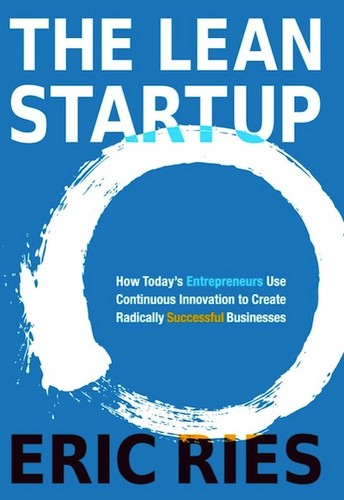
The Lean Startup
Eric Ries
Teaches data-driven experimentation and metrics to build and scale startups efficiently.
-

Big Data
Mouad Radi
Explores how data analytics transforms decision-making and competitive advantage in business.
-

Prediction machines
Ajay Agrawal
Shows how AI and predictive analytics create economic value and reshape strategy.
-

Data Driven
Jenny Dearborn
Practical guide to building data teams and using analytics for better business outcomes.
-
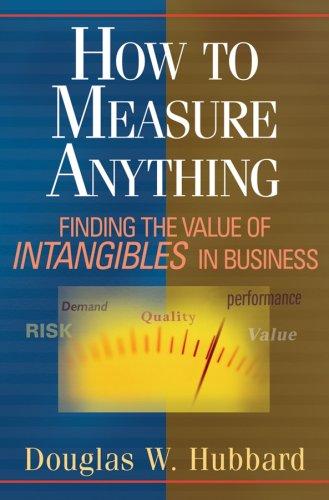
How to Measure Anything
Douglas W. Hubbard
Demonstrates quantifying uncertainty and intangibles to improve decisions with data.
-

The Signal and the Noise
Nate Silver
Reveals how to distinguish useful data signals from noise for smarter forecasting and strategy.
Founder activity
Nobody has shelved this yet
Be the first founder to add it.