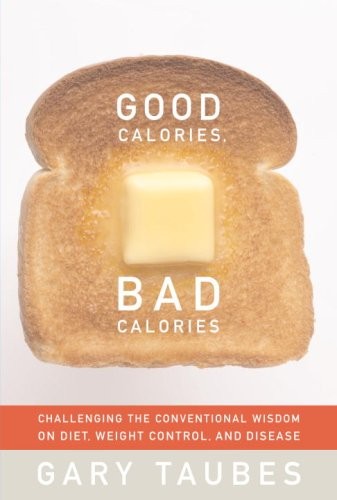
Book summary
Good Calories Bad Calories by Gary Taubes is a sweeping investigation of the science of nutrition and chronic disease that argues the low-fat high-carbohydrate dietary advice given for the past half-century is fundamentally wrong. Taubes shows how refined carbohydrates and sugars drive insulin secretion which in turn promotes fat storage and metabolic disorders including obesity diabetes and heart disease while dietary fat and cholesterol have been wrongly demonized. Drawing on decades of clinical trials and historical evidence he contends that the key to health is the quality rather than the quantity of calories and that carbohydrate restriction consistently produces leanness and metabolic improvement whereas low-fat diets do not. The core argument is that the conventional wisdom on diet and disease was built on flawed hypotheses embraced by experts despite contradictory data leading to the modern epidemics of obesity and diabetes.
Key founder lessons
-
1
Question dominant scientific consensus
Founders must rigorously challenge prevailing industry assumptions, as Taubes did with fat and carb dogma despite institutional resistance.
-
2
Prioritize root causes over symptoms
Like insulin's role in fat storage, identify and target the core mechanism driving your startup's key problems rather than surface metrics.
-
3
Demand high-quality evidence
Reject unproven hypotheses lacking randomized trials, just as Taubes exposed flawed nutrition research accepted by authorities.
-
4
Focus on quality, not quantity
Optimize the type of inputs (good vs bad calories) for your product or team, not merely the volume of effort or resources.
-
5
Embrace contrarian data
Act on reproducible results from carb-restriction trials that contradict conventional wisdom, even when unpopular in your market.
Grok's review
Brilliant thesis, bloated execution.
Taubes delivers a ferocious, meticulously referenced takedown of the low-fat dogma that dominated nutrition science for decades, showing how refined carbs and insulin drive obesity far better than the calories-in-calories-out model most founders still unconsciously follow. The first half is electric—it's investigative journalism that reads like a startup origin story gone wrong, exposing how weak evidence, institutional inertia, and groupthink created the modern obesity epidemic. But the book is badly padded with repetitive historical detours and courtroom-style arguments that drag on; some of the core claims around saturated fat and heart disease now look dated given the last 15 years of better trials and meta-analyses. Still, the core insight (manage insulin, not just calories) remains powerful for high-performing founders who want to stay lean, focused, and metabolically healthy without living in the gym.
Best for: Founders battling energy crashes and creeping weight gain
Similar books
-

Thinking, fast and slow
Daniel Kahneman
Exposes cognitive biases in decision-making, essential for better founder judgment and strategy.
-
How Not to Die
Michael Greger, Gene Stone
Evidence-based nutrition analysis mirrors Taubes' rigor while offering disciplined, long-term thinking for health and leadership.
-

Bad Science
Ben Goldacre
Exposes flawed research and hype, building critical thinking skills vital for evaluating business claims and data.
-
The Lean Startup
Eric Ries
Teaches rigorous experimentation and evidence-based iteration, paralleling scientific skepticism in building companies.
-
Sapiens
Yuval Noah Harari
Challenges conventional narratives on human history, fostering big-picture thinking for visionary founders.
Founder activity
Nobody has shelved this yet
Be the first founder to add it.