
Book summary
Testing Business Ideas by David J. Bland and Alexander Osterwalder is a practical handbook that guides entrepreneurs and innovators through a systematic process for de-risking new business concepts before investing significant time and money. It builds on the Business Model Canvas framework by providing a library of experiments ranging from low-fidelity techniques like smoke tests and customer interviews to higher-fidelity prototypes and MVPs. The core argument is that most business ideas fail due to untested assumptions and that rigorous evidence-based testing enables teams to learn faster, iterate smarter, and dramatically increase their odds of success by separating viable opportunities from those destined to fail.
Key founder lessons
-
1
Prioritize desirability testing
Founders should first test if customers want the value proposition using interviews and surveys before building, as emphasized in the book's testing sequence.
-
2
Use experiments over opinions
Replace HiPPO-driven decisions with rapid, low-cost experiments like smoke tests and landing pages to validate assumptions empirically.
-
3
Map assumptions systematically
Founders map all business model assumptions on a testable canvas then prioritize riskiest ones first for de-risking.
-
4
Iterate with evidence-based learning
Apply the learn-build-measure loop to pivot or persevere only when clear evidence from tests shows what works.
-
5
Scale only after validation
Avoid premature scaling by progressing through desirability, viability, and feasibility tests before committing major resources.
Grok's review
Useful toolkit, bloated execution.
Testing Business Ideas is a methodical, visual companion to the Business Model Canvas that gives founders a structured playbook for de-risking assumptions through rapid experiments. The strength is its clear taxonomy of test types (from smoke tests to concierge MVPs) and the practical templates that make it easy to run cheap validation loops instead of building in the dark. However, it suffers from significant padding: the book is far longer than its core ideas require, with repetitive visuals, case studies that feel cherry-picked, and evidence that is often anecdotal rather than rigorous. Some of the examples already feel dated in a world of no-code tools and AI-assisted iteration, and it underplays the psychological and team dynamics that actually determine whether founders will actually run the tests. Worth the time if you treat it as a reference manual rather than a cover-to-cover read.
Best for: Founders who overbuild before validating
Similar books
-
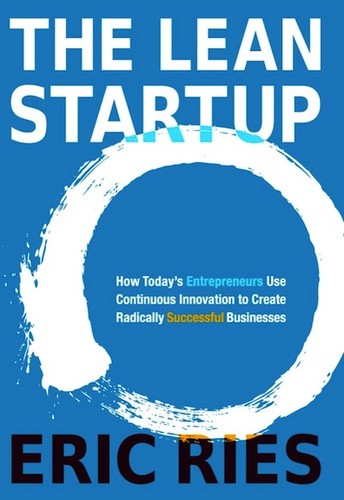
The Lean Startup
Eric Ries
Teaches validated learning and iterative experimentation to test ideas efficiently.
-

Business model generation
Alexander Osterwalder, Yves Pigneur
Visual toolkit for designing, testing, and iterating business models.
-

Value proposition design
Alexander Osterwalder
Practical methods to create products customers want using testing and iteration.
-

Running lean
Ash Maurya
Step-by-step process for iterating from plan A to a plan that works.
-

The mom test
Rob Fitzpatrick
Master customer conversations to validate ideas without bias.
-

Lean B2B
Étienne Garbugli
Proven process for finding and validating B2B opportunities.
Founder activity
Nobody has shelved this yet
Be the first founder to add it.