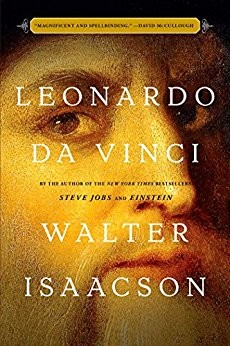
Book summary
Walter Isaacson’s biography of Leonardo da Vinci portrays the Renaissance polymath as the ultimate embodiment of creativity arising from the intersection of art and science. Drawing on Leonardo’s notebooks and fresh discoveries, Isaacson shows how his genius stemmed from trainable habits such as relentless curiosity, meticulous observation, and a playful imagination that blended fantasy with empirical inquiry. The book traces how these qualities fueled masterpieces like the Mona Lisa and The Last Supper while driving obsessive investigations into anatomy, optics, flight, geology, and engineering. At its core, the biography argues that Leonardo’s wide-ranging passions, comfort with being an illegitimate, gay, left-handed misfit, and willingness to question received knowledge offer a timeless recipe for innovation that can be cultivated in anyone.
Key founder lessons
-
1
Combine art and science
Founders should fuse creative and analytical thinking like Leonardo's Vitruvian Man to generate breakthrough innovations at discipline crossroads.
-
2
Cultivate obsessive curiosity
Startup leaders must pursue wide-ranging questions relentlessly, filling notebooks with observations to fuel unexpected product discoveries.
-
3
Master careful observation
Observe real-world details deeply as Leonardo did with anatomy and optics to inform accurate models and user insights for your venture.
-
4
Embrace playful imagination
Allow fantasy and experimentation in thinking, like Leonardo's flying machines, to prototype radical ideas without immediate practicality constraints.
-
5
Value being a misfit
Leverage outsider perspectives and willingness to question norms, as Leonardo's illegitimacy and heresy did, to think differently and disrupt markets.
Grok's review
Genius playbook for polymath founders.
Isaacson delivers a richly textured portrait that links Leonardo’s obsessive notebooks to his breakthroughs in art and engineering, showing how curiosity, pattern recognition, and relentless sketching fueled world-changing creativity—lessons that map surprisingly well onto product innovation and first-principles thinking. The book shines when it stays close to the primary sources and avoids romanticizing; the sections on observation, analogical thinking, and tolerating being a misfit are pure gold for startup builders who need to synthesize disparate domains. Weaknesses include occasional padding with repetitive praise of “genius” and some speculative connections that feel thin on evidence, plus the narrative occasionally drifts into art-history minutiae that slow the momentum for a busy founder. Still, it’s one of the better modern biographies for anyone trying to cultivate breadth without losing depth.
Best for: Curious polymath founders and product thinkers.
Similar books
-

Steve Jobs
Walter Isaacson
Reveals how Jobs blended creativity, innovation, and business strategy to build a world-changing company.
-
Elon Musk
Walter Isaacson
Explores Musk's intense drive, engineering mindset, and bold vision for multiple groundbreaking ventures.
-
The Innovators
Walter Isaacson, Francisco José Ramos Mena
Chronicles the collaborative genius and breakthroughs behind the digital revolution with startup lessons.
-

Benjamin Franklin
Walter Isaacson, Boyd Gaines
Shows how Franklin's polymath curiosity, habits, and pragmatism fueled his remarkable self-made success.
-

Einstein
Walter Isaacson
Illuminates Einstein's creative thinking, perseverance, and paradigm-shifting insights applicable to founders.
-

The Code Breaker
Walter Isaacson, Kathe Mazur
Details Jennifer Doudna's scientific quest and ethical leadership in CRISPR, offering biotech startup wisdom.
Founder activity
Nobody has shelved this yet
Be the first founder to add it.