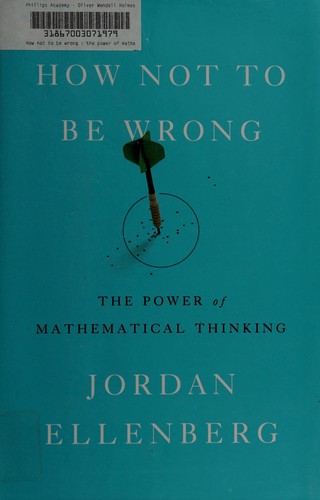
Book summary
How Not to Be Wrong by Jordan Ellenberg is an accessible exploration of mathematical thinking and its power to clarify everyday decisions and avoid common reasoning errors. Through engaging stories and real-world examples from politics, medicine, lotteries, and psychology, Ellenberg demonstrates how concepts like probability, regression to the mean, expected value, and Bayesian reasoning expose hidden truths and prevent us from drawing faulty conclusions. The core argument is that mathematics is not an abstract academic pursuit but a practical toolkit for better thinking that anyone can apply to become less wrong about the world.
Key founder lessons
-
1
Embrace mathematical thinking daily
Founders avoid binary right/wrong traps by using quantitative intuition to spot hidden patterns in metrics and markets, as Ellenberg shows with real-world examples.
-
2
Don't ignore the base rate
When evaluating startup success odds or customer behavior, always factor in the reference class probability to prevent overoptimism, drawn from Ellenberg's probability discussions.
-
3
Question linear assumptions
Growth, user adoption, or market trends are rarely linear; founders apply Ellenberg's nonlinear function insights to model realistic scaling curves.
-
4
Recognize regression to the mean
After early wins or losses, expect performance to normalize—founders use this to avoid overreacting to streaks in sales or experiments.
-
5
Leverage expected value thinking
Weigh decisions like feature bets or hires by multiplying probabilities and payoffs, preventing common errors Ellenberg illustrates through lottery and risk examples.
Grok's review
Math for founders who fear math—mostly worth it.
Ellenberg turns probability, statistics, and mathematical thinking into witty, accessible lessons that help founders avoid common reasoning traps like base-rate neglect, overfitting models to noisy data, and mistaking correlation for causation—skills every startup operator needs when reading metrics, evaluating experiments, or forecasting. The book shines when it uses real-world examples (lotteries, medical studies, voting paradoxes) to show how rigorous thinking compounds into better decisions, and the playful tone makes dense concepts stick without requiring a math degree. Weaknesses include noticeable padding in the later chapters, some examples that feel dated or overly academic, and evidence that occasionally leans on clever anecdotes rather than deep empirical rigor. Still, it's far better than most pop-math books and rewards the time for anyone who wants to sharpen their mental models.
Best for: Founders who want sharper probabilistic thinking.
Similar books
-

Thinking, fast and slow
Daniel Kahneman
Reveals cognitive biases and decision-making pitfalls crucial for startup leadership and strategy.
-

Superforecasting
Philip E. Tetlock, Dan Gardner
Shows how to improve prediction accuracy, vital for business forecasting and risk management.
-
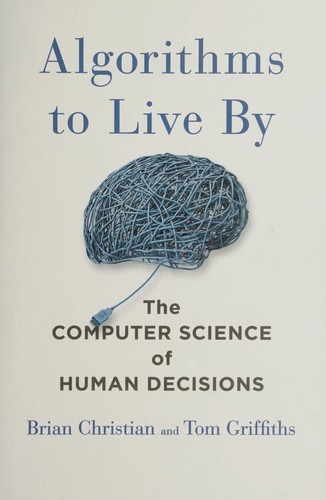
Algorithms to Live By
Brian Christian, Tom Griffiths
Applies computer science concepts to everyday decisions, boosting founder productivity and efficiency.
-
The art of thinking clearly
Rolf Dobelli, Rolf Dobelli
Catalogs cognitive errors with practical lessons for better entrepreneurial judgment and choices.
-
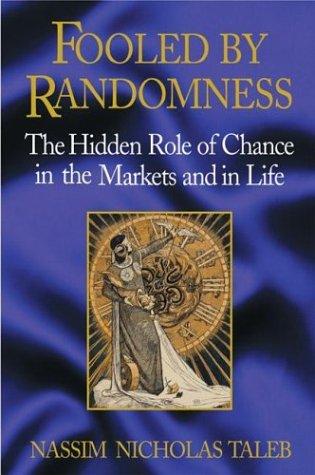
Fooled by randomness
Nassim Nicholas Taleb
Explores luck versus skill in success, offering humility and resilience lessons for builders.
Founder activity
Nobody has shelved this yet
Be the first founder to add it.