Book summary
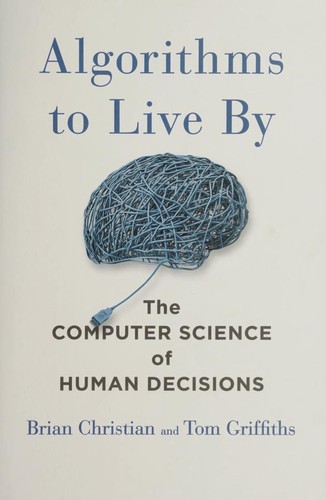
Algorithms to Live By explores how classic computer science algorithms can be applied to everyday human decisions and problems such as when to stop searching for a better option, how to organize information, and how to schedule tasks. The book examines concepts like optimal stopping, caching, sorting, and Bayesian inference, showing how these computational strategies mirror the heuristics people naturally use and reveal the computational nature of the mind itself. Brian Christian and Tom Griffiths argue that by understanding these algorithms we can make better real-world choices, reduce anxiety about uncertainty, and recognize that many cognitive biases are actually rational approximations to intractable problems. The core argument is that thinking algorithmically about life leads to more effective decisions and a deeper understanding of human cognition.
Key founder lessons
-
1
Optimal Stopping for Hiring
Use the 37% rule: interview and reject the first 37% of candidates to set a benchmark, then hire the next one better than all seen.
-
2
Explore vs Exploit Tradeoff
Balance trying new opportunities with sticking to what works; switch to exploitation when remaining time is less than the exploration phase.
-
3
Sorting's True Cost
Recognize that perfect sorting is expensive; in startups, prioritize 'good enough' ordering over exhaustive ranking of features or tasks.
-
4
Caching for Priorities
Apply LRU caching mentally: keep frequently used knowledge, tools, or processes at hand and evict the least recently used.
-
5
Constraint Relaxation
Solve hard problems by first relaxing constraints, like in scheduling; iteratively add them back to find feasible startup solutions faster.
Grok's review
Solid mental models, but padded with pop examples.
This book is one of the better popular-science reads for analytically minded founders because it translates core computer-science algorithms (caching, sorting, scheduling, Bayesian updating, multi-armed bandits, etc.) into practical heuristics for hiring, product roadmaps, networking, and decision-making under uncertainty. The chapters on optimal stopping and explore/exploit are especially strong and have aged well. Weaknesses are real: the book is padded with long anecdotes and pop-psych stories that dilute the signal, some of the cited studies feel cherry-picked or thin on replication, and a few of the analogies have dated since 2016. Still, the core ideas are high-leverage and the writing is unusually clear. Worth reading once, skimmable on re-read.
Best for: Founders who want to import CS thinking into daily operations
Similar books
-

Thinking, fast and slow
Daniel Kahneman
Reveals cognitive biases and decision-making shortcuts essential for better founder choices.
-

Superforecasting
Philip E. Tetlock, Dan Gardner
Shows how to improve prediction accuracy, crucial for strategy and risk in business.
-

Range
David J. Epstein
Argues for broad experience over specialization, aiding adaptable leadership and innovation.
-

How to Decide
Annie Duke
Practical framework for smarter decisions under uncertainty, directly applicable to founders.
-

Noise
Daniel Kahneman, Olivier Sibony
Explores variability in judgment and how to reduce it for consistent business outcomes.
Founder activity
Nobody has shelved this yet
Be the first founder to add it.