
Book summary
How to Decide by Annie Duke is a practical guide to improving decision-making by treating it as a skill that can be learned and refined over time rather than relying on outcomes or intuition alone. The book emphasizes separating the quality of a decision from its results, using tools like decision trees, probabilistic thinking, and pre-mortems to account for uncertainty and cognitive biases. Duke argues that by focusing on process—gathering diverse perspectives, weighing probabilities, and committing to deliberate evaluation—we can make better choices consistently even when luck plays a role. Ultimately it reframes regret and hindsight as opportunities for growth rather than self-judgment.
Key founder lessons
-
1
Embrace probabilistic thinking
Founders should evaluate startup decisions by assigning probabilities to outcomes rather than seeking certainty, as Duke teaches using expected value.
-
2
Separate luck from skill
Analyze post-mortems of pivots or launches by distinguishing what was controllable versus random, preventing overconfidence in future bets.
-
3
Use a decision journal
Track predictions and rationales for hires, pricing, or features in writing to calibrate accuracy and reduce hindsight bias over time.
-
4
Focus on process over results
Build repeatable decision frameworks like pre-mortems instead of judging choices solely by whether the startup outcome succeeded.
-
5
Bet on beliefs with skin in game
Test assumptions by making small, reversible bets on product experiments, treating each as a calibrated wager per Duke's framework.
Grok's review
Solid decision toolkit, but padded and light on startup grit.
Annie Duke, a former poker pro turned decision scientist, delivers a practical framework for improving judgment under uncertainty that any founder will recognize as valuable—separating luck from skill, mapping out probabilistic thinking, and using pre-mortems to stress-test choices. What works is the clarity and actionable exercises; it's the rare decision book that actually makes you practice instead of just nodding along. Weaknesses are real: the book feels padded with repetitive examples and filler anecdotes, some of the core ideas feel dated or overly simplified compared to more rigorous behavioral econ work like Kahneman, and the evidence is thinner than I'd like, relying heavily on her poker background rather than deep startup case studies. Still worth a founder's time if you're systematically bad at hard calls, but don't expect it to be your new operating system.
Best for: Founders wrestling with high-stakes uncertainty
Similar books
-

Thinking, fast and slow
Daniel Kahneman
Reveals cognitive biases and decision-making systems to improve founder judgment under uncertainty.
-

Superforecasting
Philip E. Tetlock, Dan Gardner
Teaches probabilistic thinking and forecasting techniques essential for startup strategy and risk assessment.
-
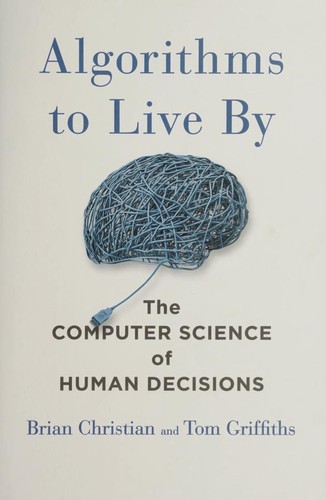
Algorithms to Live By
Brian Christian, Tom Griffiths
Applies computer science algorithms to everyday choices, boosting productivity and business efficiency.
-

Noise
Daniel Kahneman, Olivier Sibony
Explores variability in judgments and how to reduce it for better leadership and management decisions.
-

Range
David J. Epstein
Argues for generalist breadth over narrow specialization, helping founders adapt and innovate across domains.
Founder activity
Nobody has shelved this yet
Be the first founder to add it.