
MakerThrive @MakerThrive ·
@MakerThrive on XFinished “Nineteen Eighty-Four” by George Orwell


Nineteen Eighty-Four follows Winston Smith, a low-ranking member of the ruling Party in the superstate of Oceania, as he secretly rebels against the totalitarian regime led by the omnipresent Big Brother. The novel depicts a world of perpetual war, mass surveillance, thoughtcrime, and the systematic rewriting of history to maintain absolute power. Its core argument warns that unchecked authoritarianism, enabled by propaganda, linguistic control like Newspeak, and the erasure of objective truth, can destroy individual freedom and reality itself.
Surveillance destroys autonomy
Founders must safeguard user data fiercely; unchecked monitoring erodes trust and invites regulatory backlash like in Oceania's telescreens.
Language shapes thought
Craft precise company narratives and avoid Newspeak-like buzzwords that limit strategic thinking and team clarity.
Truth is a competitive edge
Resist rewriting metrics or history as the Party does; transparent data builds credibility with investors and customers.
Doublethink breeds dysfunction
Eliminate contradictory goals that force cognitive dissonance, ensuring aligned execution instead of Ministry of Truth-style contradictions.
Power corrupts incrementally
Guard against mission creep in governance; small authoritarian habits, like Big Brother's cult, can erode founding principles over time.
Essential warning on power, language, and truth.
1984 remains one of the most chilling and prescient books ever written; its anatomy of how totalitarianism rewires reality through Newspeak, doublethink, and perpetual surveillance is brutally effective and still relevant to anyone building in the age of algorithmic feeds, data monopolies, and narrative control. Orwell's portrait of a regime that doesn't just lie but owns the past and the meaning of words should make every founder pause before they ship another 'trust us' feature or scale a platform that shapes what billions see as true. That said, the middle section drags with long theoretical excerpts from the forbidden book and some of the world-building feels dated or overly mechanical by today's standards; it's not a business manual and the evidence is literary, not empirical. Still, the psychological and political insights cut deeper than most strategy tomes.
Best for: Founders scaling platforms or dealing with regulation and narrative.
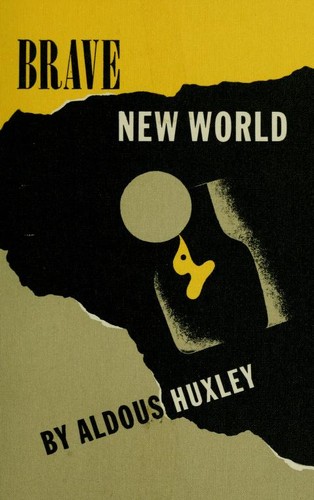
Brave New World
Aldous Huxley
Dystopian vision of control through pleasure offers sharp insights on consumer culture and managing teams.

The Psychology of Money
Morgan Housel
Timeless lessons on behavior, risk, and decision-making that every founder needs for building wealth and resilience.

Thinking, fast and slow
Daniel Kahneman
Reveals cognitive biases that shape decisions, helping leaders avoid pitfalls in strategy and hiring.

The goal
Eliyahu M. Goldratt, Jeff Cox
Novel about manufacturing constraints that teaches systems thinking vital for scaling operations efficiently.

Antifragile
Nassim Nicholas Taleb, Genís Sánchez Barberán
Explains thriving in chaos and uncertainty, essential for navigating startup volatility and black swans.
The Hard Thing About Hard Things
Ben Horowitz
Raw lessons on leadership, firing, and crisis management drawn from real founder battles.
MakerThrive @MakerThrive ·
@MakerThrive on XFinished “Nineteen Eighty-Four” by George Orwell