Book summary
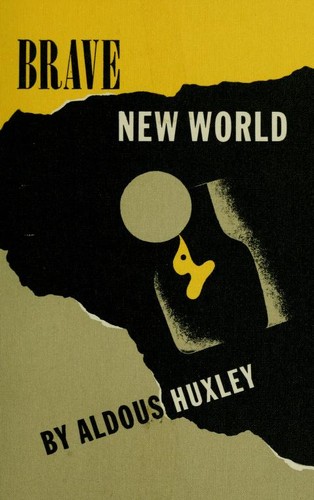
Brave New World is a dystopian novel set in a futuristic society where humans are genetically engineered and conditioned from birth to fit into a rigid caste system that prioritizes stability, consumerism, and pleasure. The World State eliminates individuality, family, and deep emotions through technology, soma drugs, and hypnopaedic indoctrination, worshiping Henry Ford as its deity in the year 632 AF. The story follows characters like Bernard Marx and Lenina Crowne as they encounter the "Savage" John from a reservation, whose Shakespeare-inspired values clash with this engineered utopia and expose its moral emptiness. Huxley's core argument is a warning that humanity's pursuit of happiness, efficiency, and technological control could lead to the loss of freedom, authentic experience, and what makes life meaningful.
Key founder lessons
-
1
Consumerism as social control
Founders must recognize how engineered demand and instant gratification, like soma and hypnopaedia, can lock users into addictive loops that erode long-term value creation.
-
2
Stability over innovation
Prioritize societal or product stability at the expense of progress only if it serves humanity; Huxley's World State shows how suppressing creativity for predictability stifles true breakthroughs.
-
3
Genetic and cultural predestination
Avoid building systems that predetermine user paths or roles, as the caste system in the novel demonstrates how it eliminates individual agency and potential.
-
4
Loss of authentic emotion
Design products that foster real human connection rather than engineered happiness, lest they create the emotional shallowness and relational voids depicted in the conditioned society.
-
5
Truth sacrificed for happiness
Resist trading unfiltered reality for user comfort, because the novel warns that a world without discomfort or dissent leads to intellectual and moral decay.
Grok's review
Prescient warning on engineered comfort, but drags.
Huxley's dystopia nails the horror of a society optimized for stability, pleasure, and consumption—Soma as the ultimate founder productivity hack gone wrong, genetic castes mirroring modern talent hierarchies, and consumerism as the new religion. It's a sharp critique of trading freedom for happiness that every builder should wrestle with before scaling 'user engagement' into addiction. That said, the middle sags with repetitive world-building lectures, the characters feel like mouthpieces, and some social predictions (especially around sex and family) feel both dated and oddly prudish by today's standards. The evidence is literary intuition rather than data, so treat it as provocative fiction, not a strategy manual.
Best for: Founders scaling addictive products or AI ethics.
Similar books
-

1984
XAVIER COSTE, George Orwell
Explores surveillance and control, teaching founders about power dynamics, culture, and ethical leadership.
-

The Glass Castle
Jeannette Walls
Resilience memoir showing how to overcome chaos and build stability, vital for startup endurance.
-
Sapiens
Yuval Noah Harari
Reveals how myths and stories shape societies, helping founders craft compelling company narratives.
-

Thinking, fast and slow
Daniel Kahneman
Unpacks cognitive biases to improve decision-making and avoid common founder pitfalls.
-

The Sovereign Individual
James Dale Davidson, William Rees-Mogg
Predicts tech-driven societal shifts, offering strategic foresight for building future-proof companies.
-
Zero to One
Peter A. Thiel, Blake Masters
Challenges conventional thinking to create true innovation and monopoly-like advantages.
Founder activity
Nobody has shelved this yet
Be the first founder to add it.