
Book summary
Zone to Win by Geoffrey A. Moore is a business strategy guide that outlines how large enterprises can successfully pursue disruptive innovation while maintaining their core operations. Moore introduces a four-zone framework—Performance, Productivity, Incubation, and Transformation—to allocate resources and manage different types of initiatives, arguing that companies must deliberately carve out a "zone to win" by focusing on a single disruptive bet that can create massive new value. The core argument is that without this disciplined separation and prioritization, established firms inevitably lose to nimble startups because they spread resources too thinly across sustaining and disruptive efforts. The book provides practical tools for CEOs to balance short-term performance with long-term transformation.
Key founder lessons
-
1
Prioritize the Zone of Transformation
Founders must focus 80% of resources on disrupting core business models to create new growth engines, as Moore outlines in the four-zone framework.
-
2
Protect the Zone of Incubation
Allocate protected funding and talent to nurture disruptive innovations separate from core operations to avoid being crushed by short-term demands.
-
3
Exploit the Zone of Productivity
Optimize legacy businesses for cash flow and efficiency to fund transformation without starving the core of necessary resources.
-
4
Minimize the Zone of Performance
Ruthlessly cut underperforming activities in the core to free up capacity for high-potential transformation initiatives.
-
5
Appoint a dedicated Transformation Leader
Install a senior executive solely accountable for the Zone of Transformation, reporting to the CEO, to ensure focused execution amid conflicting priorities.
Grok's review
Solid framework, padded execution
Moore's Zone to Win offers a useful mental model for how large enterprises can simultaneously exploit their core business while exploring disruptive opportunities by dividing the company into four zones (Performance, Productivity, Incubation, Transformation). The core insight—that you must ring-fence disruptive bets with dedicated resources, leadership, and metrics—is genuinely valuable for founders navigating scale or corporate partnerships. However, the book is heavily padded with repetitive diagrams, generic case studies, and consultant-speak that could have been a long HBR article. Some of the tech examples already feel dated, and the evidence is mostly anecdotal rather than rigorous. Still worth reading if you're a founder selling into enterprises or scaling past product-market fit, but don't expect revelation on every page.
Best for: Founders selling to or partnering with large enterprises
Similar books
-

Crossing the Chasm
Geoffrey A. Moore
Master marketing and selling disruptive innovations to mainstream customers.
-
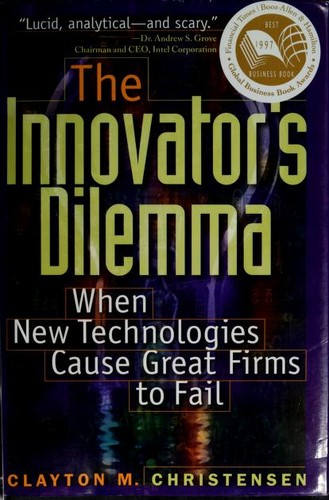
The Innovator's Dilemma
Clayton M. Christensen, L J Ganser
Explains why great companies fail and how to harness disruptive innovation.
-
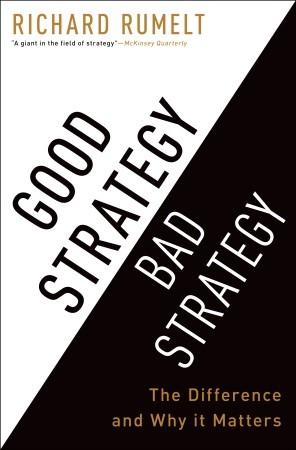
Good Strategy, Bad Strategy
Richard P. Rumelt
Teaches how to craft clear, coherent strategies that drive real results.
-

High Output Management
Andrew S. Grove
Timeless principles for scaling operations, teams, and productivity as a leader.
-
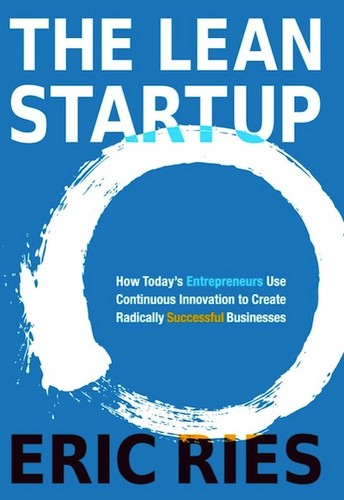
The Lean Startup
Eric Ries
Builds validated learning and agile iteration into company creation.
-

Only the paranoid survive
Andrew S. Grove
Navigates strategic inflection points to keep your company ahead.
Founder activity
Nobody has shelved this yet
Be the first founder to add it.