
Book summary
Toyota Kata by Mike Rother reveals the hidden routines or "kata" that underpin Toyota's legendary success with continuous improvement and adaptation. The book introduces the Improvement Kata, a repeating four-step pattern of establishing a challenging target condition, working iteratively through obstacles via PDCA cycles, and learning from problems, paired with the Coaching Kata, a structured way for leaders to teach and develop this scientific mindset in others at every level. Rother contrasts this with traditional management by results, arguing that organizations can achieve superior performance and adaptability by making improvement and problem-solving an everyday habit embedded in people's thinking and behavior. The core argument is that any company can build a culture of ongoing learning and innovation by practicing these simple, human-friendly routines rather than relying on tools or top-down directives.
Key founder lessons
-
1
Practice the Improvement Kata daily
Founders establish a target condition, experiment iteratively through obstacles, and learn systematically like Toyota's routines for continuous adaptation.
-
2
Use the Coaching Kata to develop teams
Leaders ask guiding questions to build improvement kata thinking in every employee, creating a culture of scientific problem-solving.
-
3
Focus on process over results
Shift from management by outcomes to practicing kata patterns that enable repeatable improvement and handling of uncertainty.
-
4
Grasp the current condition first
Before setting targets, founders must deeply observe and measure the actual process to identify true obstacles accurately.
-
5
Experiment toward target conditions
Break ambitious goals into small, rapid PDCA cycles, adjusting based on what is learned rather than following fixed plans.
Grok's review
Powerful routines, padded with repetition.
Toyota Kata is one of the few books that actually codifies the invisible engine behind Toyota’s legendary adaptability: two simple daily practice patterns (Improvement Kata and Coaching Kata) that turn continuous improvement from a slogan into muscle memory. For startup founders drowning in reactive firefighting, the core insight—focus on the next target condition and navigate obstacles scientifically rather than leaping to solutions—is gold and directly applicable to product iteration, team habits, and scaling culture. That said, the book is badly padded; Rother repeats the same four diagrams and generic examples for 250 pages, the “six years of research” feels more anecdotal than rigorous, and the Toyota-specific framing now feels dated in a world of remote, high-velocity software teams. It’s not a page-turner, but the distilled kata routines themselves are worth the slog.
Best for: Founders building repeatable improvement habits in growing teams
Similar books
-
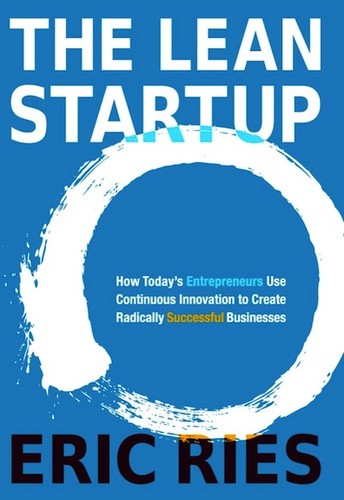
The Lean Startup
Eric Ries
Teaches iterative experimentation and validated learning, mirroring Toyota Kata's scientific approach to improvement.
-

The goal
Eliyahu M. Goldratt, Jeff Cox
Uses a novel to illustrate constraint management and continuous improvement, offering practical business lessons.
-

High Output Management
Andrew S. Grove
Delivers actionable frameworks for scaling operations and boosting productivity in growing companies.
-

Thinking in systems
Donella H. Meadows, Diana Wright
Explains systemic thinking to identify leverage points for sustainable business growth and problem-solving.
-

The Phoenix Project
Gene Kim, Kevin Behr
A novel showing DevOps and lean principles in action, highlighting cultural and process transformation.
-
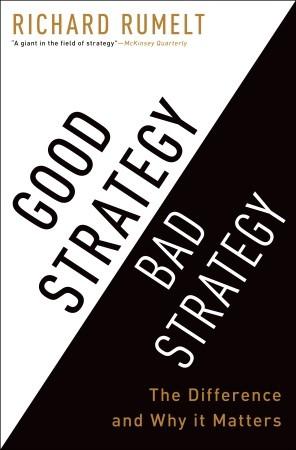
Good Strategy, Bad Strategy
Richard P. Rumelt
Equips founders with clear frameworks for diagnosing problems and crafting effective, focused strategies.
Founder activity
Nobody has shelved this yet
Be the first founder to add it.