Book summary
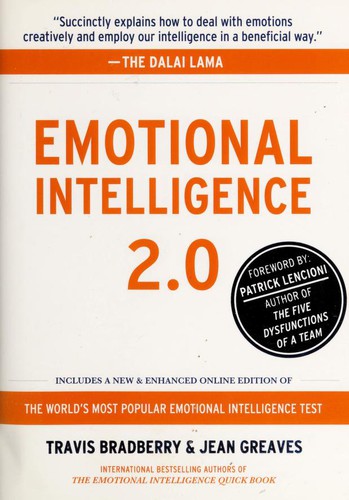
Emotional Intelligence 2.0 by Travis Bradberry and Jean Greaves explains that emotional intelligence (EQ) is a stronger predictor of success than IQ and can be deliberately increased through targeted practice. The book breaks EQ into four core skills—self-awareness, self-management, social awareness, and relationship management—offering dozens of practical, actionable strategies for each. It includes access to an online Emotional Intelligence Appraisal that diagnoses an individual’s strengths and weaknesses so readers can focus their development efforts where they matter most. The core argument is that improving these four skills produces measurable gains in performance, leadership, and personal well-being.
Key founder lessons
-
1
Master Self-Awareness First
Founders use the book's EQ test and strategies to accurately identify emotions in the moment, enabling better decisions during high-stress pivots.
-
2
Build Self-Management Habits
Apply the book's clear techniques to control disruptive emotions, helping founders stay flexible and recover quickly from setbacks like failed launches.
-
3
Sharpen Social Awareness
Founders practice the book's empathy and organizational awareness tools to read team and customer cues, improving fundraising and hiring outcomes.
-
4
Optimize Relationship Management
Use the book's influence, conflict management, and collaboration strategies to build stronger investor and team relationships critical for scaling.
-
5
Continuously Track EQ Progress
Founders retake the included Emotional Intelligence Appraisal as prescribed to measure gains in the four skills, ensuring sustained leadership growth.
Grok's review
Useful concepts, padded self-promotion.
The core four-quadrant EQ model (self-awareness, self-management, social awareness, relationship management) remains valuable for founders who steamroll teams or burn out under pressure; the included online assessment gives a quick baseline that's more actionable than most pop-psych quizzes. Unfortunately the book is heavily padded with repetitive lists, generic anecdotes, and 100+ pages of strategies that feel like filler to justify the price and upsell the authors' TalentSmart training empire. Evidence is mostly anecdotal or loosely cited older studies, and many of the examples already feel dated in today's remote-first, AI-augmented startup world. Worth skimming for the framework and test if you've never read Goleman, but skip the full text unless you need a very basic on-ramp.
Best for: Founders with zero prior EQ exposure
Similar books
-
The 7 Habits of Highly Effective People
Stephen R. Covey
Builds self-awareness and interpersonal skills crucial for leadership and team management.
-

How to Win Friends and Influence People
Dale Carnegie
Timeless principles for empathy, communication, and relationship-building in business.
-
Emotional Intelligence
Daniel Goleman
Deepens understanding of EI's role in leadership, decision-making, and high-performance teams.
-

Drive
Daniel H. Pink
Explores motivation science to boost productivity, engagement, and company culture.
-

Thinking, fast and slow
Daniel Kahneman
Reveals cognitive biases to improve decision-making and strategic thinking as a founder.
-

Leaders Eat Last
Simon Sinek
Shows how creating safety and trust drives loyalty, innovation, and long-term success.
Founder activity
Nobody has shelved this yet
Be the first founder to add it.