
Book summary
The Medici Effect by Frans Johansson explores how groundbreaking innovation occurs at the intersection of different fields, cultures, and disciplines rather than within a single domain. The core argument is that the most original ideas emerge when concepts from unrelated areas collide, creating what Johansson calls the "Medici Effect" after the creative explosion sparked by the Medici family's patronage in Renaissance Florence. Through numerous examples from science, business, and the arts, the book shows how diverse teams, broad knowledge, and openness to randomness lead to exponential increases in creative output compared to specialized expertise alone. Johansson provides practical strategies for individuals and organizations to actively seek these intersections and overcome the barriers that prevent them.
Key founder lessons
-
1
Seek intersections of fields
Founders should deliberately combine unrelated disciplines like tech and biology to spark breakthrough innovations as seen in the Renaissance Medici era.
-
2
Diversity drives innovation
Assemble teams with varied cultural, professional, and experiential backgrounds to generate more original ideas than homogeneous groups.
-
3
Embrace the adjacent possible
Explore ideas at the edges of existing knowledge where new combinations become feasible, rather than staying within one domain.
-
4
Quantity yields quality
Generate a high volume of intersectional ideas, accepting that most will fail, to surface the few truly disruptive ones.
-
5
Lower barriers to experimentation
Reduce risk and cost of trying novel combinations through prototyping and iteration, mirroring how Medici patronage enabled bold artistic and scientific trials.
Grok's review
Insightful but padded intersection theory.
The core idea that groundbreaking innovation happens at the intersection of different fields and cultures is genuinely useful for founders chasing unfair advantages; Johansson fills the book with vivid stories from science, art, business, and food that make the concept stick. Where it falters is the relentless repetition, thin empirical grounding (mostly anecdotes), and a slightly dated 2006 lens that underplays how today's AI and deep specialization are changing intersection dynamics. It's still worth reading once, but feels more like a long TED talk stretched into book form than a rigorous playbook.
Best for: Founders seeking creative breakthroughs
Similar books
-

Range
David J. Epstein
Champions generalists over specialists, showing how diverse experiences fuel innovation like in The Medici Effect.
-
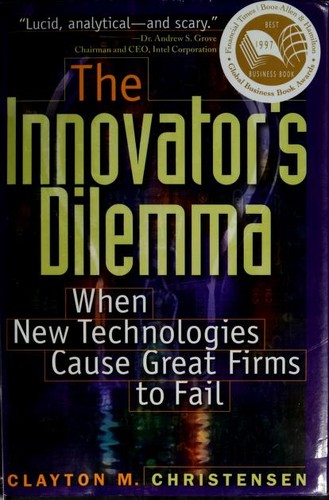
The Innovator's Dilemma
Clayton M. Christensen, L J Ganser
Explains why successful companies fail at disruptive innovation, offering critical lessons for building adaptable startups.
-

Where good ideas come from
Steven Johnson
Reveals the networked, interdisciplinary nature of innovation, mirroring the intersectional creativity of The Medici Effect.
-

Originals
Adam Grant
Explores how non-conformists drive change and innovation, with practical insights for founders challenging the status quo.
-

The Black Swan
Nassim Nicholas Taleb, David Chandler
Teaches embracing unpredictability and building robust systems, vital for navigating uncertainty in startups.
-

Antifragile
Nassim Nicholas Taleb, Genís Sánchez Barberán
Shows how to thrive in chaos and volatility, turning randomness into advantage for resilient company building.
Founder activity
Nobody has shelved this yet
Be the first founder to add it.