
Book summary
A Random Walk Down Wall Street by Burton Gordon Malkiel argues that stock prices move unpredictably in a random walk, making it impossible for most investors or professionals to consistently outperform the market through stock picking or market timing. The book explains the efficient market hypothesis, critiques technical analysis and fundamental analysis, and uses historical bubbles like the dot-com crash to illustrate the dangers of speculative manias. Malkiel advocates broad diversification through low-cost index funds that track the overall market, tailoring the approach to an investor's age and risk tolerance via a life-cycle strategy that gradually shifts from stocks to bonds. The core message is that passive investing delivers superior long-term results for the vast majority of people.
Key founder lessons
-
1
Markets are mostly efficient
Index funds beat most active stock-picking; founders should focus energy on building the business, not timing the market.
-
2
Diversify broadly
Spread investments across asset classes to reduce risk, freeing founders from obsessing over single-stock volatility.
-
3
Avoid bubbles and manias
Recognize irrational exuberance like dot-com valuations; maintain discipline when peers chase hype.
-
4
Match portfolio to life stage
Early founders can afford more equities, shifting conservative as company and family mature.
-
5
Costs destroy returns
Minimize fees and taxes with low-cost indexing so more capital compounds for the venture.
Grok's review
Still useful EMH primer, now padded and dated.
Malkiel's core argument—that most active stock-picking is a loser's game and broad indexing wins—remains one of the most valuable mental models any founder can absorb before they start playing with their newfound liquidity. The efficient-market hypothesis sections are lucid and iconoclastic in a world full of “genius” VCs and meme-stock pitch decks. Unfortunately the book has ballooned over many editions into a meandering personal-finance textbook full of boilerplate advice on IRAs, 529 plans, and retirement that feels like filler. The evidence is mostly anecdotal or selective; later chapters on behavioral finance feel thin and bolted-on compared to Kahneman or Thaler. The examples from the dot-com era now read like quaint history lessons rather than fresh warnings. Worth reading once for the investing philosophy, but don't treat it as your sole guide.
Best for: Founders who just had an exit and need to avoid blowing it on 'alpha'.
Similar books
-
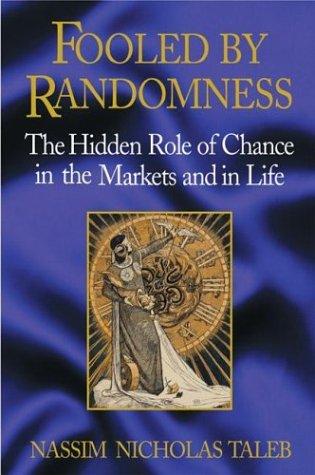
Fooled by randomness
Nassim Nicholas Taleb
Explores luck and randomness in success, teaching founders to build antifragile businesses.
-

Thinking, fast and slow
Daniel Kahneman
Reveals cognitive biases affecting decisions, helping leaders make better startup choices.
-

The Psychology of Money
Morgan Housel
Timeless lessons on behavior with money, essential for managing startup finances and growth.
-

The Intelligent Investor
Benjamin Graham
Classic on value investing and risk, offering principles for prudent business strategy.
-

Poor Charlie's Almanack
Charles T. Munger, Charles T. Munger
Multidisciplinary mental models for better decision-making in building and scaling companies.
-

The Little Book of Common Sense Investing
John C. Bogle
Advocates low-cost index investing, with lessons on simplicity and long-term business focus.
Founder activity
Nobody has shelved this yet
Be the first founder to add it.