
Book summary
Grinding It Out is the autobiography of Ray Kroc, the man who turned a small California hamburger stand operated by the McDonald brothers into the global fast-food empire of McDonald's. Kroc recounts how at age 52, after years as a milkshake-machine salesman, he recognized the potential in their efficient assembly-line system, bought the rights, and relentlessly expanded it through franchising, standardization, real-estate ownership, and aggressive marketing. The core argument is that extraordinary success comes from perseverance, obsessive attention to detail, enthusiasm, and the willingness to take calculated risks even late in life, proving that vision and execution matter more than youth or formal education.
Key founder lessons
-
1
Persist relentlessly past 50
Kroc sold milkshake machines into his 50s before seizing the McDonald's opportunity; founders should keep grinding without a fixed retirement age.
-
2
Obsess over operational details
Kroc's fixation on perfecting the french fry process and assembly-line efficiency turned a small stand into a scalable empire.
-
3
Franchise for explosive growth
Kroc structured franchising to align incentives and maintain strict standards, enabling rapid national expansion without owning every location.
-
4
Build a system bigger than yourself
He created standardized training, advertising, and real-estate models at Hamburger University that outlived any single operator.
-
5
Spot hidden potential in others
Kroc recognized the McDonald brothers' simple innovations as revolutionary, then out-executed them by scaling what they had discovered.
Grok's review
Essential origin story, but padded and self-mythologizing.
Grinding It Out is the raw, first-person account of how a 52-year-old milkshake-machine salesman turned a small California burger stand into the global behemoth that redefined fast food, franchising, real-estate leverage, and operational obsession. Kroc's manic energy and relentless focus on QSC&V (Quality, Service, Cleanliness, Value) leap off the page and will resonate with any founder who has bet the company on a system. That said, the book is noticeably padded with folksy digressions, score-settling, and selective memory; the evidence for many of his 'brilliant' calls is thin and the 1970s cultural assumptions feel dated. Still, it's one of the purest glimpses into the mind of a late-blooming, obsessive builder you'll ever read.
Best for: Late-start founders obsessed with systems and scale.
Similar books
-

The HP Way
David Packard
Reveals how building a values-driven culture scales a business from garage to giant.
-

Traction
Gino Wickman
Provides a practical system for gaining control and growing any startup systematically.
-

Built to Last
Collins, James C., Jim Collins
Shows how visionary companies endure by preserving core values while stimulating progress.
-
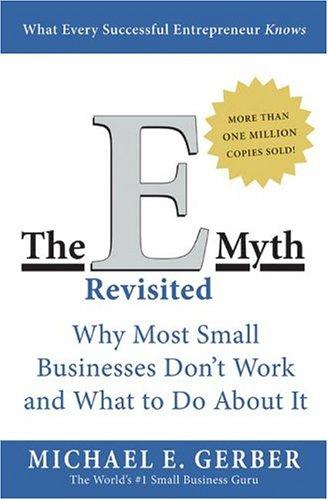
The E-myth revisited
Michael E. Gerber
Explains why most small businesses fail and how to build one that works without you.
-

Good to Great
Collins, James C., Jim Collins
Details disciplined leadership and strategies that transform good companies into great ones.
-

Pour your heart into it
Howard Schultz
Chronicles building Starbucks with relentless execution and passion for the customer experience.
Founder activity
Nobody has shelved this yet
Be the first founder to add it.